RSS Feed

What’s for Lunch in Warsaw?

Posted on
In the words of my friend and former Warsaw-dweller “PK,” ‘Polish food is usually fried and made with pork or cream.’ You might be thinking, ‘Yum! What’s the big deal?’ But I have to agree with PK on this one. Polish cuisine leaves a lot to be desired from a health perspective. But it is cold. Colder than a well-digger’s ass, in fact, so I understand their obsession with insulating ingredients.
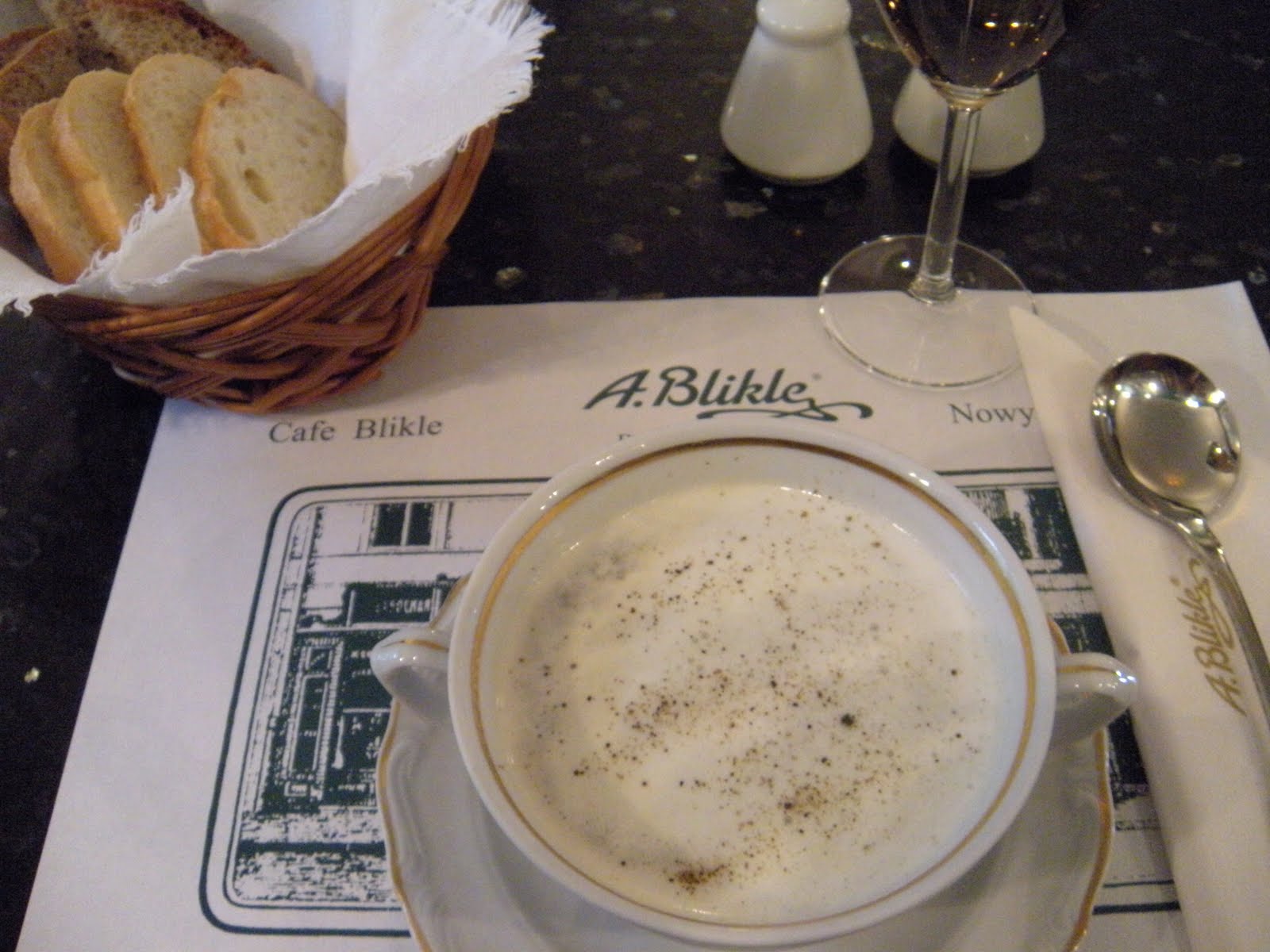
After getting my fix of pierogis yesterday, however, I was looking for something lighter today. I’m currently sitting at A. Blikle for lunch, a cafe that dates back to 1869. It’s a Warsaw institution, and the only cafe on Nowy Swiat to survive the Warsaw Uprising of 1944 when the street was reduced to rubble. You’d think that would be an accomplishment in and of itself, but the cafe was actually forced to close when communism reared its ugly head. Lucky for us, when communism became a thing of the past in 1989, A. Blikle reopened to its former glory.

Allow me to set the scene: the background jazz music is at a perfect acoustic level, and the dark wood molding that creeps midway up the wall meets a panel of jade green that’s decorated with black and white photos of days gone by. The granite and brass tables are regal, and every one is inhabited by pairs of chatting people. The waiters, dressed in vests and bow ties, bounce from room to room bringing liquid and gustatory treats to those waiting with baited breath. It is no accident this place survived the times.

I ducked in for the Żurek staropolski (old Polish sour soup) and the Tort “Generalski,” reportedly named after General Charles de Gaulle, a former patron of A. Blikle. The soup was light, but incredibly flavorful with slivers of kielbasa and hard-boiled eggs. The cake, on the other hand, was anything but light. A thin pastry crust laid the foundation for layers of chocolate pastry cream and cherry-soaked chocolate cake. The pale pastry dough blushed each time I pierced it with my fork from the oozing cherry juice. It was sinful, and I’m of the opinion that it was this cake that got them into trouble all those years back with the communists. It’s against the law for something to taste that good. The jury’s still out on whether or not my lunch fit into the “light” category, but that aside, I love finding places that combine classic cuisine with nostalgia and do it well. A. Blikle definitely satisfies both.

Over cups of tea and coffee, patrons licked their lips from the savory and sweet delicacies they ordered, and I looked on thinking about what this place must have been like in its true hayday. In my imagination, men were dressed in coats with tails and smoked tobacco pipes under their tophats. And the women wore furs, and had wind-swept hairstyles with red lipstick. You could sense that element of yesteryear glam. You definitely don’t need to be dressed for the opera to enjoy A. Blikle, so if you find yourself in Warsaw, and invariably on Nowy Swiat, head to #33 for an unrivaled slice of cake. You’ll be in for a little slice of history too.

A. Blikle
http://www.blikle.pl/

Next Stop: Dublin

Practicing Polish

Posted on
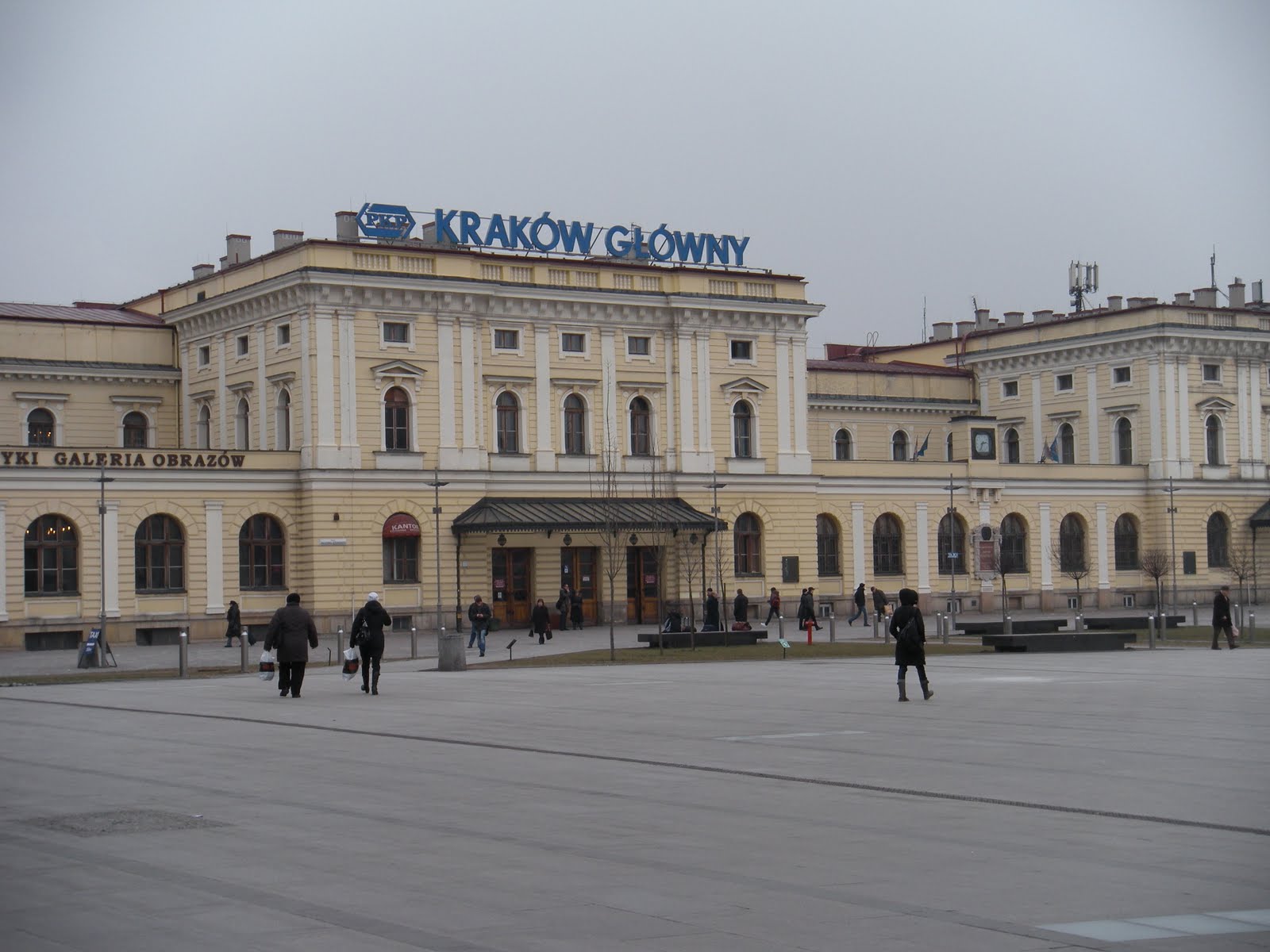
When a Pole flicks his/her neck, it means they want to have a drink of vodka with you. When a Pole hands you a map of Krakow and directs you to their favorite “milk bar” for pierogis, you go. I like Poland. It’s forceful from an F & B perspective, and I can get behind that.

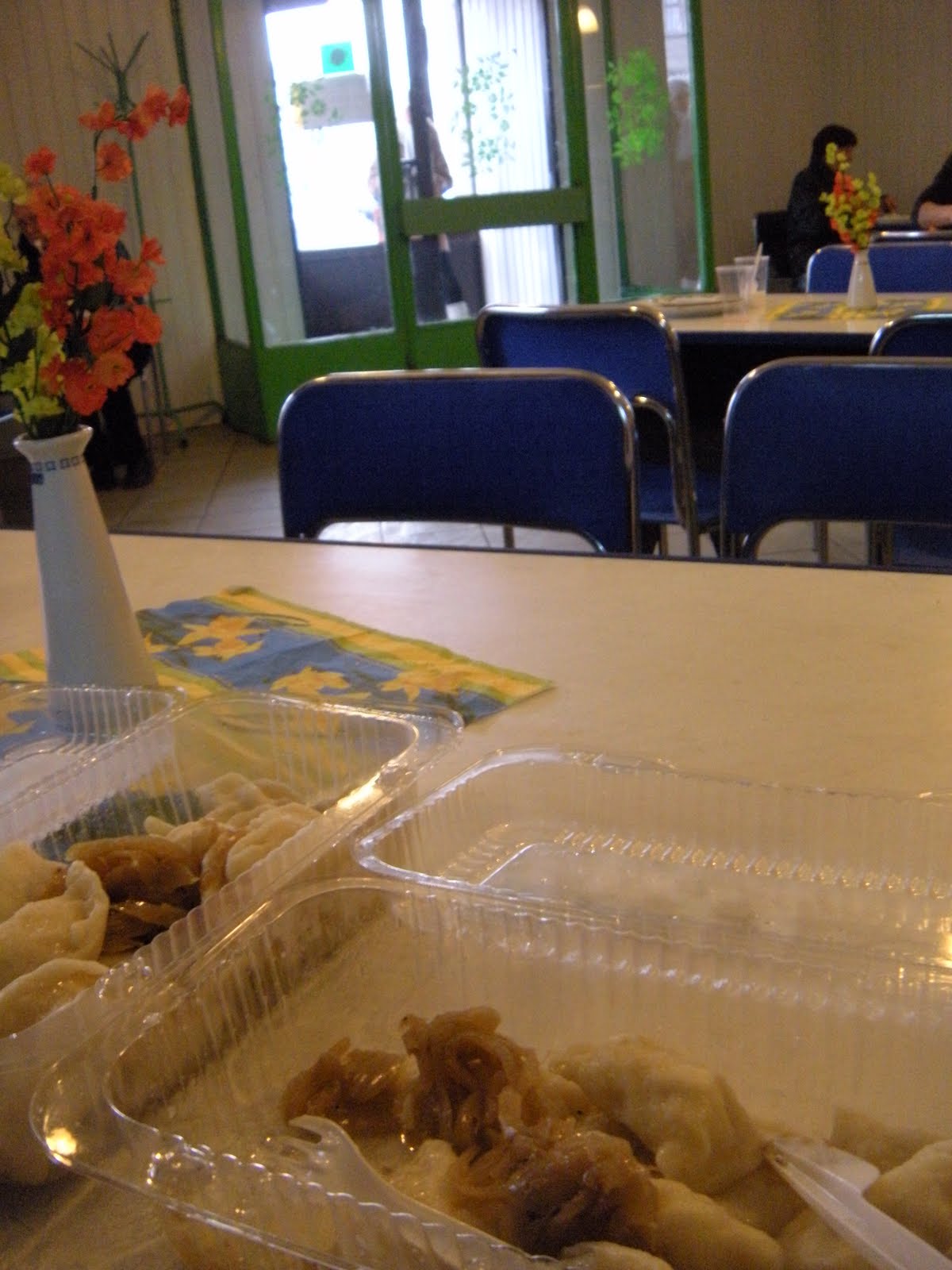
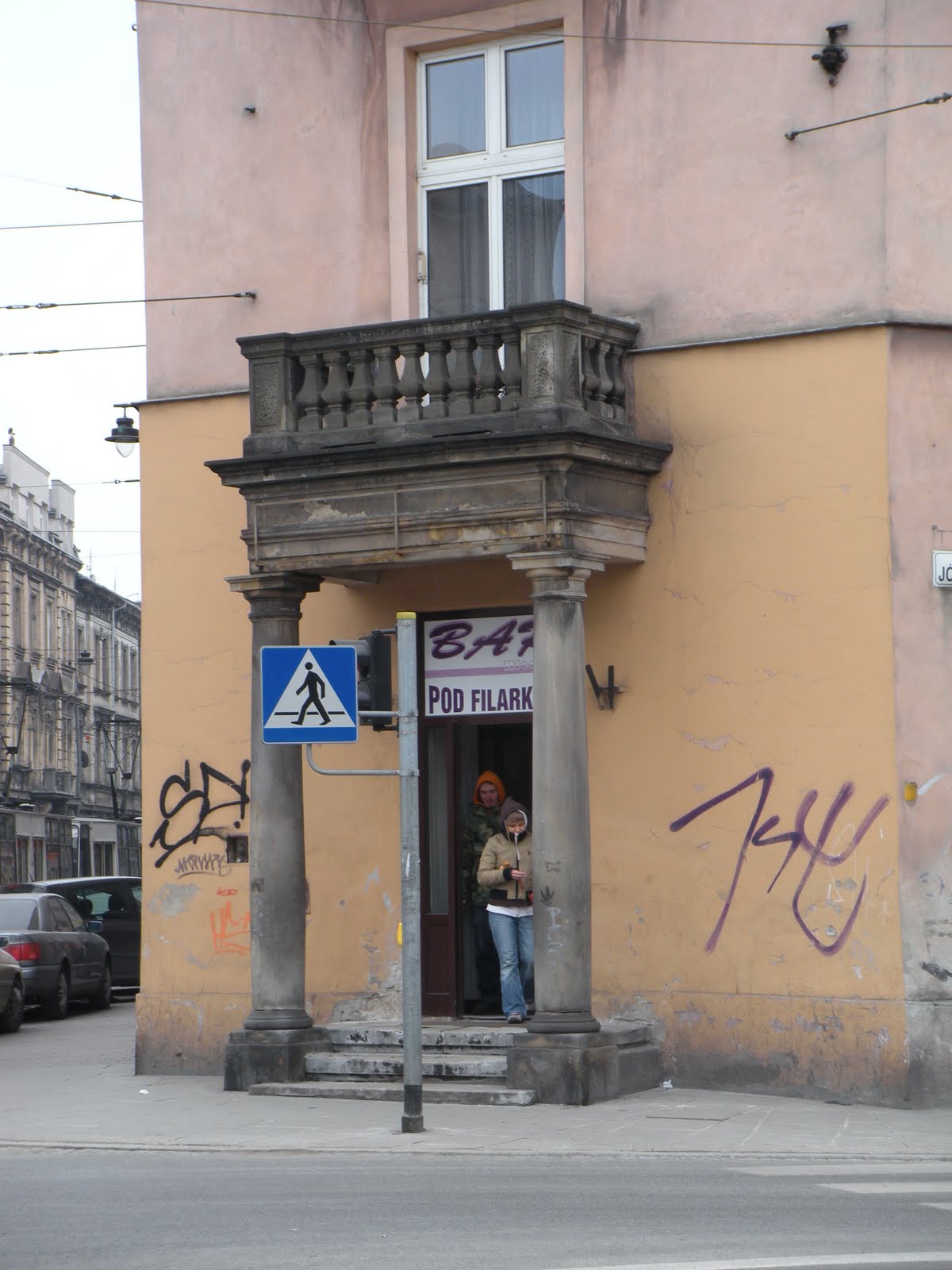
I showed up at Pod Filarkiem on the advice of Agnieszka and Lukesz, my unbelievable hosts. This place doesn’t look like much from the outside (or inside for that matter), but with the throngs of patrons lined up, it becomes immediately obvious that’s not the point. It’s 100%, bonafide Polish, and that’s all they speak here. Some of you are likely thinking, “Kyle, you don’t speak Polish.” But for those of you who know my obsession with foreign languages, you’re probably thinking to yourself, “Who cares, self. I’m sure Kyle waltzed right up and knew what to say.” If you thought the latter, well, then you’ve already earned your first demerit badge of the post.

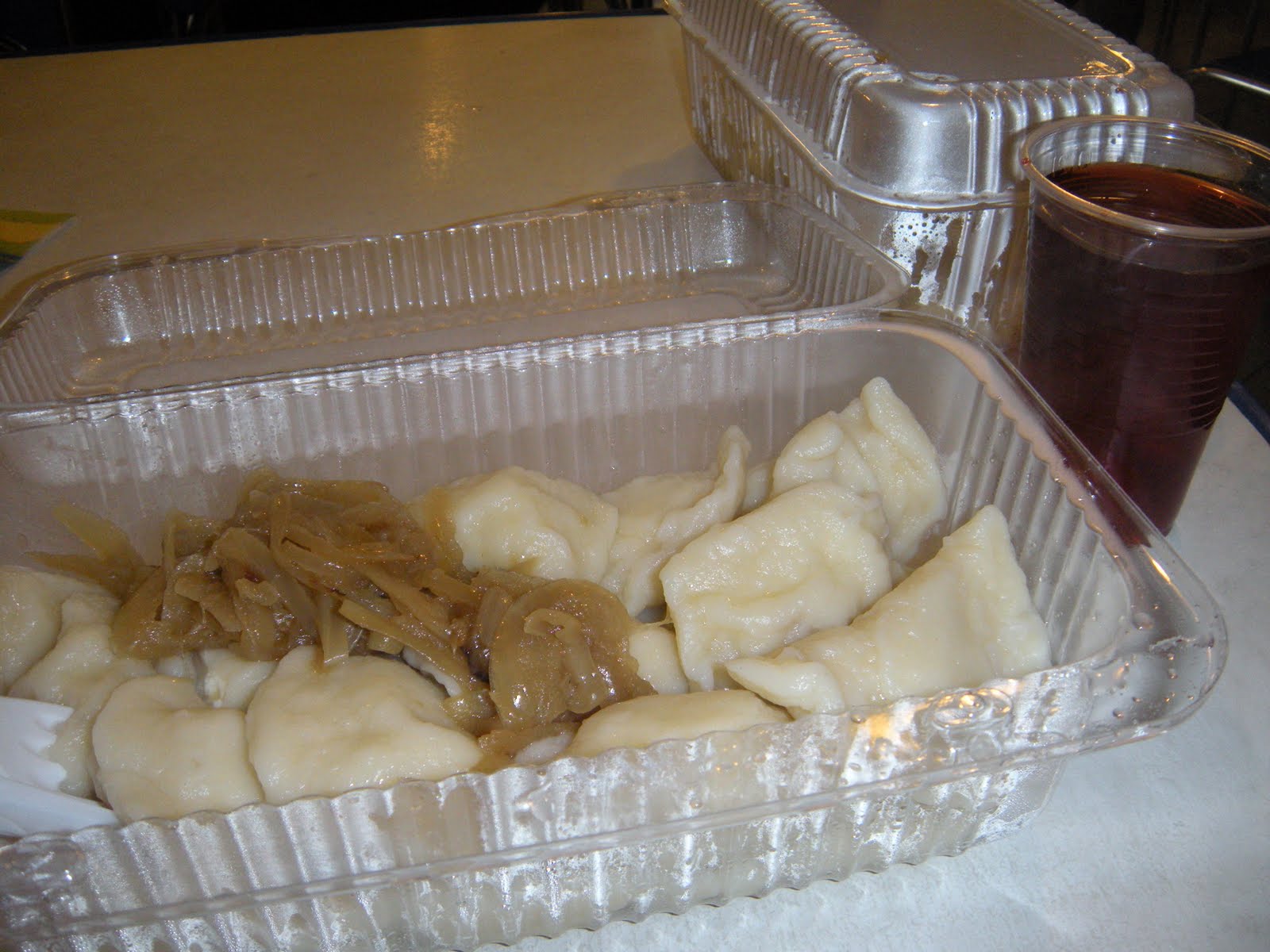
Lucky for me, I was sent with a cheat sheet, and Agnieszka, Lukesz and I had a rather comical phonetic discussion over breakfast so I’d know how to pronounce things. I had my notes, but I was nervous. Thinking to myself, ‘This woman will never see me again,’ I took a deep breath, glanced at my pronunciations, and gave it the old college try. She seemed to know what I was saying, but as these things go, my Polish was far from perfect. I ended up with an order each of pierogi ruskie and pierogi z mięsem, and there are probably 20 in each order. Alas, my call for a “po porczi” (half order) of each fell on deaf ears, and I’m currently sitting across the table from a woman (it’s all common seating) who is staring at me like I’m Kobayashi.

The good news is, I think I finally found a place where they don’t immediately know I’m foreign, with the exception of the people at the counter. Numerous people have (presumably) asked to share my table in Polish, and I just nod with an “I don’t have a clue what the $@!# you’re talking about” look, smile, and nod, and they sit down with me to stare at my gluttonous feast.

So, pierogis…what are they? I guess the best way to describe them are like tortellonis or gyoza. It’s a fairly delicate layer of dough wrapped around fillings, in my case cheese and meat. Both orders came topped with a small pile of grilled onions, and they seem to be relaxing in a butter bath. But not too much. They’re fantastic, fresh, and affordable little dough purses that will help me shove on in Krakow until I head to the train station tonight…with my second container of pierogis. Luckily, I also misunderstood the “for here or to-go” question, and mine showed up in takeaway boxes.

I’m quickly (and thankfully) learning that native foods are the reigning champs when traveling, especially if you can get directed to a locals-only joint. If pierogis are as easy as they look to make, don’t be surprised if you find a Polish plate in front of you at my house. I’ll spare you the leftover Communist stoicism that the counter servers here have perfected, and if you’re lucky, I won’t even make you order in Polish. Na zdrowie!

Next Stop: Warsaw

Not Going Hungry in Hungary

Posted on
This post is a bit of an anomaly. It’s a restaurant review, and perhaps you’ve noticed that I haven’t wasted space on my blog waxing poetically about restaurants (and yes, I have been eating in them). That’s because I’ve yet to find one worthy of a ringing endorsement, until today…

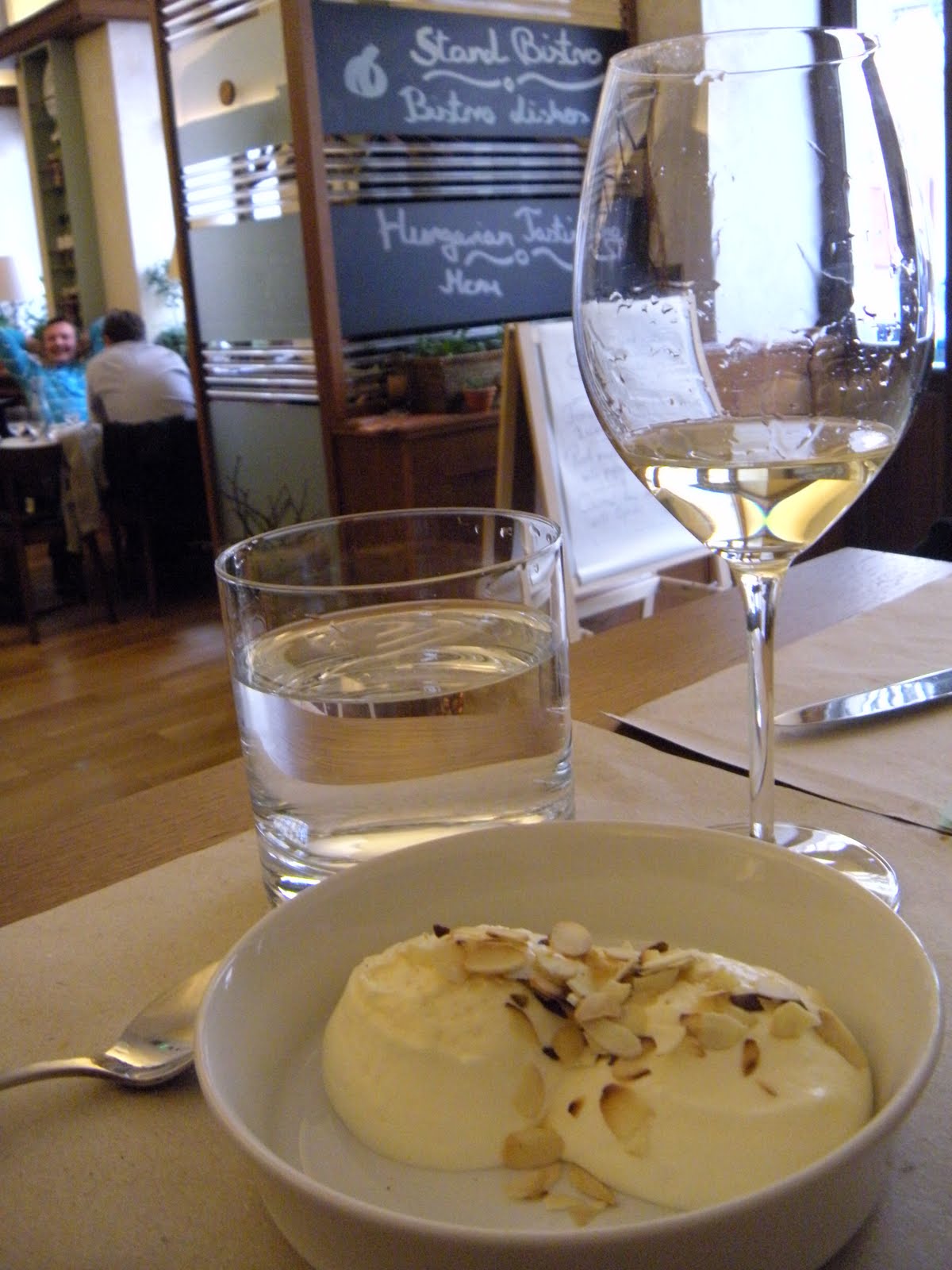
I’m currently stuffing my face full of three courses at Stand Bistro. And including a glass of wine, the entire meal is setting me back less than 2000 HUF (roughly $10). I’m not sacrificing ambiance (in fact I’m staring directly at DIO, another Budapest institution), and the food is fresh, tasty, and most certainly, affordable. My pumpkin soup with chickpeas was silky and warm, a perfect insulator on this bitter day. And the papardelle affumicata was a bed of delicate noodles with the perfect amount of light red sauce and pancetta. On deck: an almond mascarpone mousse.

So, while I’m sorry your other two restaurants closed, thank you Chef Viktor Segal for this cataclismic and cost-effective addition to my culinary crusade. Stand Bistro is brilliant, and was well worth tracking down on Google Maps for Blackberry. This just further verifies my point that with a bit of research, you can dine substantially well for pennies on the dollar. Or Forint. Whatever I’m paying with today.

The Hills

Posted on
No, not the those hills with the artificial characters who are completely devoid of personality, humor, and often times, taste. I’m talking about the Etyek region of Hungary, a hilly town about 20 minutes from central Budapest. Here, dry white wines reign supreme, and I spent the day tasting them and a few of their red partners in crime with Gabor and Carolyn Banfalvi of Taste Hungary.

The Etyek region is a relative baby when it comes to wine making. It got its start in 1990, and wines from this region are notoriously high in acidity. We began our day at Kattra Pinceszet winery, just off the main drag. Here, we sampled a chardonnay, pinot grigio, olasz (Welsh) riesling, pinot noir rosé, pinot noir, and cabernet sauvignon. The tasting room was set ablaze by a rather charming fireplace, but that was really all that set any of us on fire at this winery. The wines were okay, but they paled in comparison to those we’d find later in the day.

After closing the door on the first winery, we continued up the hill towards Hernyak Birtok. WHAT a winery. For those of you in California who are imagining a cavernous-like structure with enough room for your graduating high school class, well, that’s not what this was at all. Upon arriving and surveying the menagerie of cats and dogs that roamed about the property, we were whisked downstairs with glasses to the most charming barrel-lined cellar to start our tasting. Here, the winemaker would extract the wines from the barrels by mouth and fill our glasses with his handmade love.

Hernyak Birtok is an artisanal winemaker that employs relatively minimal technology. They specialize in late harvest wines, and only net about 12,000 bottles per year. Some are sold in hotels in Budapest, but most are sold directly from their winery and you have to drive there to get your hands on the prize. “Birktok” means “estate” in Hungarian, and while their property wouldn’t conjure up images of anything Kardashian-like, their “pajama vineyards,” as they call them, are unequivocally charming and breed unrivaled wines.

We ate an amazing lunch here of porcini mushroom soup, gnocchi-like potatoes with a dill sour cream (I avoided much of it, naysayers), pork knuckle with a white carrot confit, and a corn bread dessert with fruit and homemade whipped cream. This was all compliments of their son…the chef in this undisputed family affair. The wines at Hernyak Birtok were first class, and we sampled a sauvignon blanc, pinot grigio, grüner, cuvée of pinot noir and chardonnay with sauvignon blanc added later, and a pinot noir. All were divine, and Kattra’s wines didn’t hold a candle to what we had here. In the background, Bijou, their dog, wrestled with one of their cats in a chair adjacent to the fire. It was like being at home…only thousands of miles away.

After begrudgingly packing up and saying bye, we made our way to winery #3: Kezes-Labos. It took a bit of an effort to find it among the rows of storage cellars, but when we did, Carolyn and I both agreed that the narrow, rock tasting room shaped like a barrel was a lovely respite from the intermittent snow. Sure, the winemaker may have been a bit rough around the edges, but he had us laughing with his method for drinking palinka, a Hungarian apricot brandy. “You take it as a shot, and make sure to breathe it out, and that’s how you don’t get drunk.” Hmmmm. The jury’s still out on that one, sir, but the rest of your wines, a really sweet late harvest chardonnay and a regular chardonnay, were quite good.

To finish up our day, we nestled in at Rokusfalvy Fogado, a restaurant, tasting room, and bed and breakfast that weren’t all in the same place. We were briefly met by the winemaker here, and learned that after a career in marketing, he opted to pursue his passion and started the winery and restaurant. Sounds familiar! Being that Etyek is a primarily white wine region, again we sampled a pinot blanc, sauvignon blanc, cuvée of chardonnay, grüner and pinot grigio, rosé, but also a first vintage pinot noir from 2008. They were magnificent, and paired nicely with the pinxtos his chef prepared for us.

I got more than my fill of Hungarian wines today, but only tackled a small wine region that was easy to reach from Budapest. As it turns out, there are even more wineries about two hours away from here, so it seems like a third trip to the city is in the cards. You know what they say, “three’s a charm.” So, that settles it. Who’s coming with me?

Taste Hungary
www.tastehungary.com

Next stop: Krakow

Živoli in Zagreb!

Posted on
Živoli means “cheers” in Croatian, and it’s a fitting title after the day I had today. It was bookended with libations, starting with champagne in the morning and a visit to a winery in the afternoon. And let’s not forget about the grappa breaks we took in the middle of cooking. It’s a wonder I made it out of the kitchen and into bed alive.
I set-up this adventure with the help of Alan Manic from Secret Dalmatia. He specializes in gastronomy and tours in the Dalmatia region of Croatia. However, upon asking him for help in locating something in Zagreb, he took on the challenge and provided me with a fantastic chance to cook in an amazing restaurant.
Today was busy. BU-SY. It was an absolute taste test about what it would be like to own a restaurant or work as a chef. I arrived at Restoran Klub Gastronomada at 8:00 a.m. to find Chef Sime and Chef Grger waiting for me upstairs. As we drank said glasses of champagne, they told me a bit more about their restaurant and consulting company. The restaurant only uses organic ingredients, and everything is shopped for daily (we would do this later on at the nearby market). They make their food to order (including the risottos), and only serve Croatian wines in-house. The restaurant space is quite small, but they also have three banquet rooms where they can seat more people and hold special events. And on the wall of the dining room was a place for artists to display their work, which they change periodically. It was warm, imaginative and inviting, and I was happy I’d be having my lunch in such a classy place.
So, what did we have for lunch? Well, we started by making the dough for our bread so it could proof while we visited the market. It was really simple, and Chef Sime was happy I’d taken a pasta making class because the kneading techniques were exactly the same and I didn’t even need to be supervised. Homemade bread dough was completed in 10 minutes or less. Bread aside, we headed to the market where we picked-up seven types of fish for our soup (I dubbed the soup “The Seven Seas”), produce, paprika cheese, veal, and a few other things. Chef Sime seemed to know everyone there, presumably because they visit the market everyday, and as he was explaining things to me, the purveyors would hand over a sample for each of us to try. I had some amazing corn bread, a delicious piece of sausage, and a piece crispy bacon fat that’s used for flavor in recipes.
We carted our loot back to the kitchen, checked our dough and got our bread into the oven, and then went straight to work on the fish soup. He showed me how to properly clean the fish, and I took over de-scaling them and ripping out their innards with my bare hands. It was fun! As I worked on that, he created the base for the soup with a mirepoix of sorts, tomatoes, potatoes, garlic, orange peel, bay leaves, and a bit of Croatian olive oil. From there, we added in the fish (heads and all), a bit of white wine, and covered it with vegetable stock to simmer away in the background.
In the foreground, we grated the paprika cheese and coated it with flour, beat up some eggs, and trimmed the veal into chops. These would later be breaded and cooked. We trimmed up the amazing Croatian greens we purchased, and put those into a giant pan with a bit of garlic and olive oil, and then sprinkled them with nutmeg. They cooked down like spinach, and made a bed for our veal chops and a neighbor for our boiled red potatoes.
We started lunch by sampling four Croatian olive oils with our homemade bread. We were both really proud of what came out of the oven, and everyone agreed that it was fantastic with the olive oils! Alan and his friend Igor joined us for lunch in the main dining room, and our menu was magnificent. It was so simple and relaxed with reflections of the Mediterranean, and there’s no arguing that what we made was healthy. We had a different wine with each course that was expertly paired, including a port-like wine and an aperatif at the end.
For dessert, we enjoyed a pie made from olives. I’m sure this sounds bizarre, but if you have the chance, take a page from the writers at The Boston Globe and visit Klub Gastronomada for the opportunity to taste it. Sweet and savory collided in this dessert in a way that I plan to replicate when I get home. I’m hoping if I beg and plead, they will give me the recipe. It was THAT good.
As if all of this wasn’t enough, we finished up lunch and drinks, and Chef Sime, Alan and I headed to Korak Winery in Samobor, about 20 minutes outside the city center. High up on a breezy hill, we sat with the winemaker in the most charming little tasting room. The fireplace blazed on in the corner as we made our way through about five bottles of wine, and sampled his wife’s homemade cornbread and cheese. We chatted about food, blogging, cookbooks, and we each gave our opinions about what we tasted in each wine. I think my palette is improving because I was tasting all sorts of notes that were evidently spot-on (or maybe they were just saying that).
I learned an incredible amount about Croatian food and wine over the course of the day thanks to Alan, Chef Sime, and Chef Grger. Croatia is a place I will no doubt be back to, possibly even on this trip. I wasn’t able to make it to Dalmatia or Istria in the south, and according to all of them, they are must-see parts of this relatively small country. Hospitality seems to be a way of life here, and the people…well…the people are the most welcoming of hosts.
Secret Dalmatia
www.secretdalmatia.com
Restoran Klub Gastronomoda
www.gastronomadi.hr
Next Stop: Budapest

What is Slovenian Cuisine?

Posted on

Slovenian cuisine. Slovenian cuisine. What on earth is it? It was a question I was asking those I encountered in Ljubljana, and it was met with the same inquiry…”Hmm, what is Slovenian cuisine?” 

Control of this country has changed hands so many times over the years that, from a culinary standpoint, they are influenced by quite a few of their neighbors. And when you factor together the cuisines of Hungary, Italy, and Austria (just to name a few), you get a rather interesting answer when it comes to the initial question. There’s pizza on every corner, goulashes galore, soups for those bone-chilling days, giant gnocchi, and quite a lot of meat. After overdoing it for the last two weeks or so on pasta in Italy, I was pretty happy to up the iron intake, I have to say.
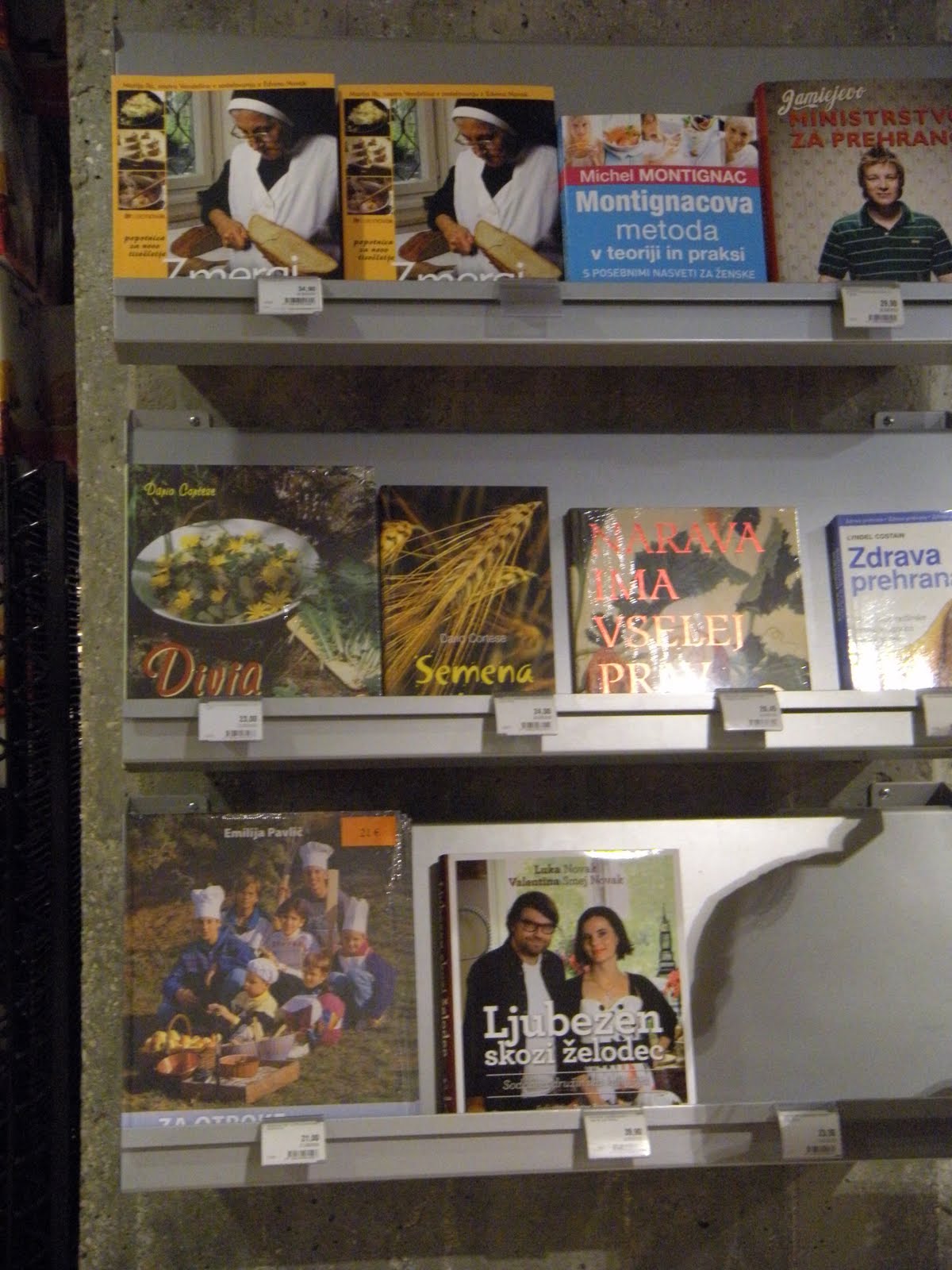
Today, I met with a woman who has authored a cookbook in Slovenia, and has a second one about to go to print. Her mission is to get kids into the kitchen, and also to improve the quality of food in schools. Evidently, their system leaves a lot to be desired, not unlike the school lunch program in America, and so she has made it her mission to visit schools and teach kids how to make better food choices. Emilijia is such a fantastic woman, and I felt really lucky that she took a few hours from her busy schedule to visit a market with me and talk to me a bit more about “Slovenian cuisine” (whatever that is).

I met her at the train station, and from there, we went to a pretty swanky market in central Ljubljana. It was actually quite interesting because housed in the basement of a would-be department store was a Whole Foods-eque market. And it was packed with people. We stopped first to check out her cookbook on the shelf next to Jaime Oliver’s, and then moved over to the “bio” foods section. They are very popular, and through somewhat broken translation, I gather “bio” equals organic. 

It was a rather large cross section of aisles with everything from jams and dried fruits, to chickpeas, lentils, pastas, breads, tofus, teas, and herbs. Emilija is from Koper, Slovenia, which is a coastal town to the south, so we talked a bit more about what their diet looks like. Not surprisingly, it includes fish, and she told me she eats many small meals throughout the day. Most everything comes from their garden, the fish her husband catches, the bread that she bakes, et al. In fact, she showed up to meet me with a bunch of fresh herbs, homemade pasta with calimari her husband had caught, fresh-baked bread, an apple from her garden…all for me. And in the market, she insisted on buying me salt from Piran (another amazing gorgeous Slovenian seaside town) and dried figs that are good for your blood. 

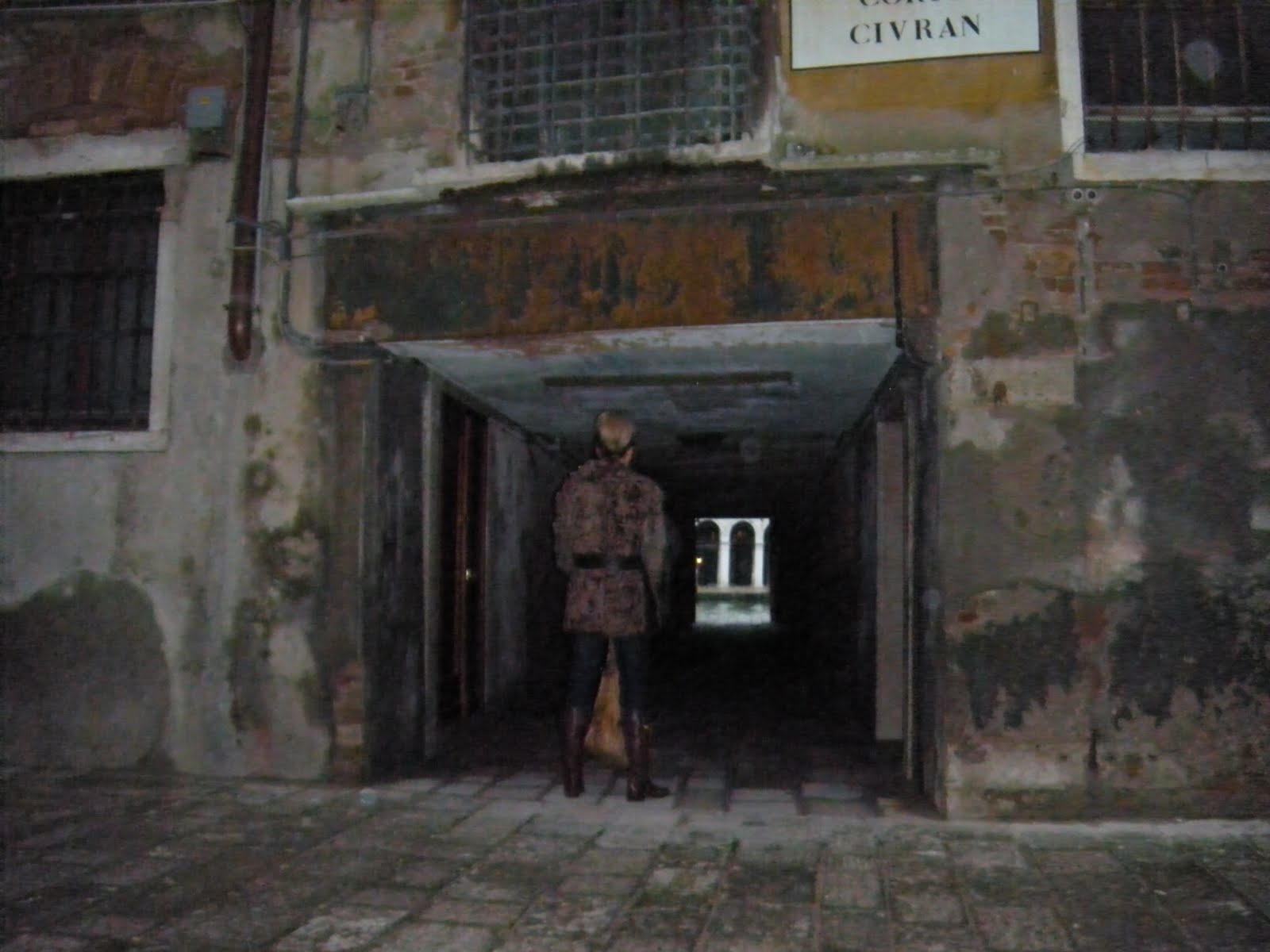
Incidentally, when I jumped on the train after meeting her, I had a smorgasbord of treats to sample. And as we glided along the rails and I sampled her delicious gifts, I thought to myself, “So, Kyle…what the heck is Slovenian cuisine?” As you’ll see from the picture, I’m still looking and trying to figure it out.

EMILIJA PAVLIČ


Next Stop: Zagreb


Venetian Wanderlust

Posted on
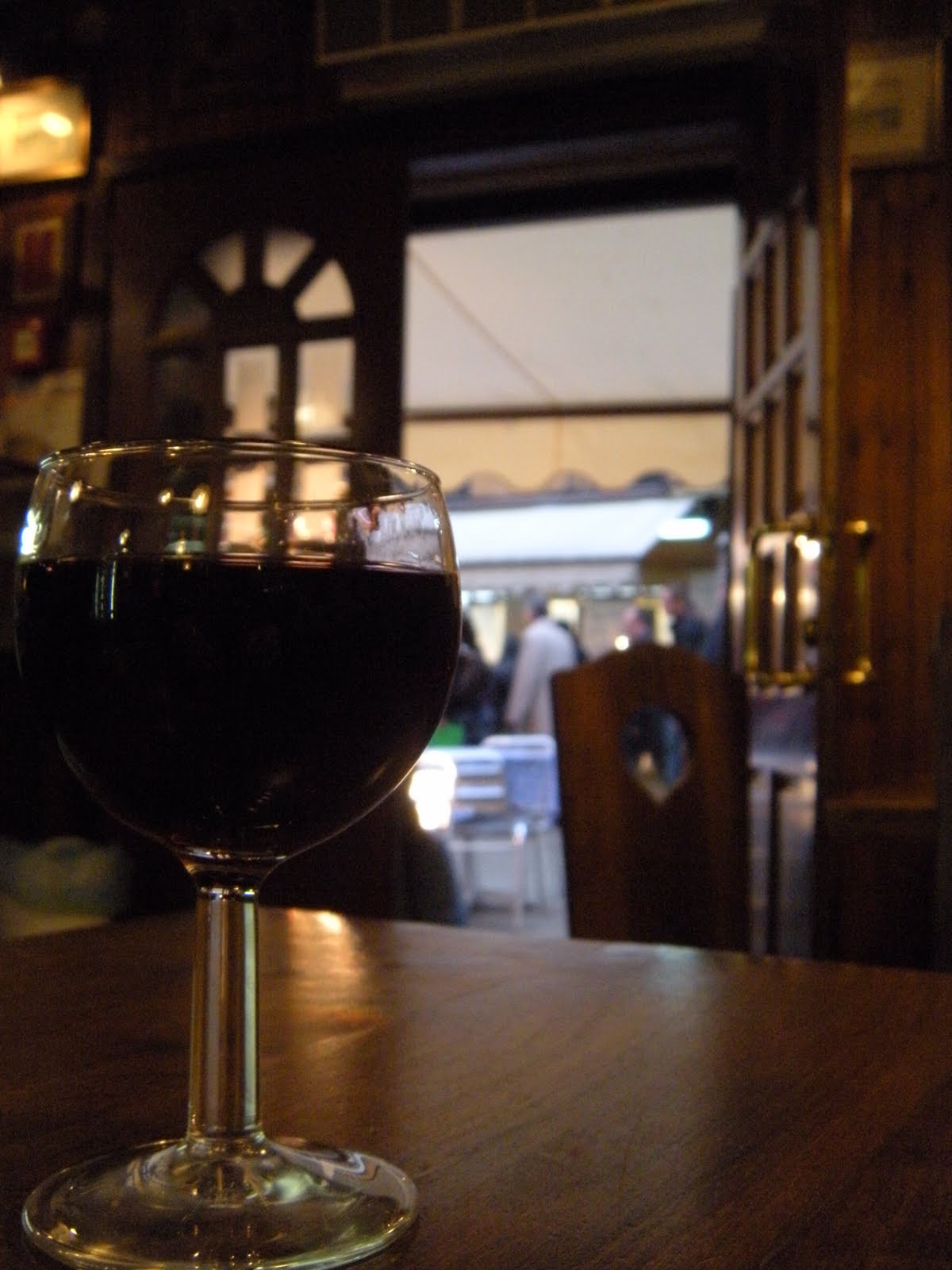
For those of you who think that Venice is expensive, I want you to know that I agree to disagree with you. Today, and it is Sunday when everything (including the Tabacchi) is closed, I managed to find a place slinging glasses of wine for €0.66 a glass (not a typo) and another place where dinner cost €6.00 including a pint of beer. No, I am not a unicorn or some other mythical creature; I just did a little due diligence and stumbled upon two gold mines in Canareggio.

And with the money I saved, I bought a fierce new top for St. Patrick’s Day in Dublin. Yep…you heard me correctly. There’s been a minor modification in my routing and I will be drinking green beer and getting my craic on in the land of my ancestors this year.