RSS Feed

Category Archives: Travel

You Get What You Pay For

Posted on
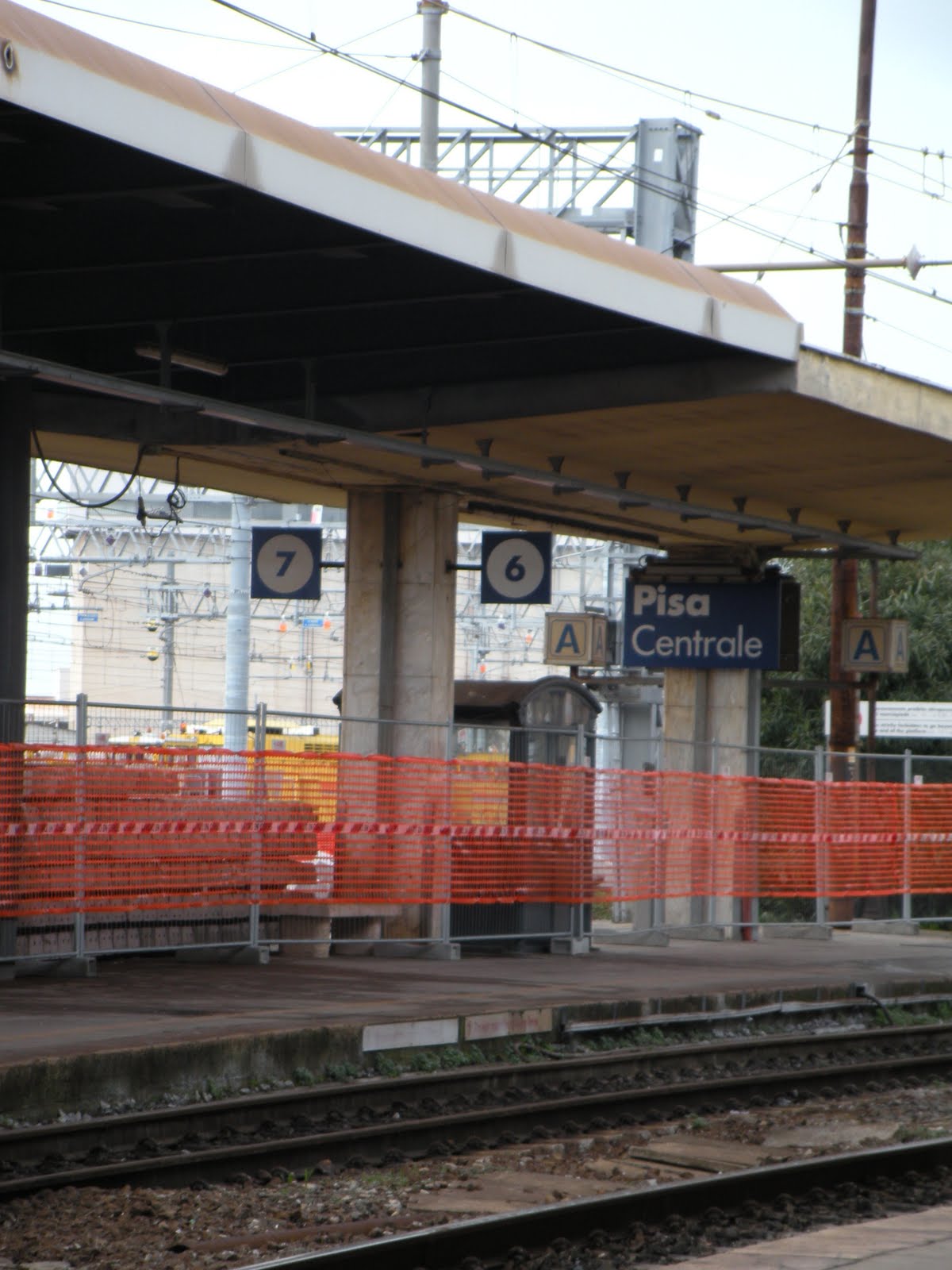
Italian trains leave a lot to be desired. A LOT. Our departure was delayed by a half hour (along with every other train on the board), and we’ve crawled maybe 300 yards from the station in Pisa and have stopped about five times for no apparent reason. I could get out and pogo stick pulling my suitcase faster than this.

The one exception I’ll make to this complaint involves their tariffs. For €5.60, we got our onward tickets to Florence complete with a KISS FM-style concert in our cabin by two harlequin-haired Italians. I’m actually not sure if they even know that anyone else is sitting in here. Or maybe they don’t care. It’s like an American Idol audition, and in their most recent ballad (an Italian song), I recognized only one word: “vaffanculo.”

Ironic, because that’s how I feel about this train right now. I’ll let you look that up yourself.

Next Stop: Florence

Paris Cooking Classes…Take Two

Posted on
Traveling back to Paris meant I’d have time for two more cooking classes…on the same day.

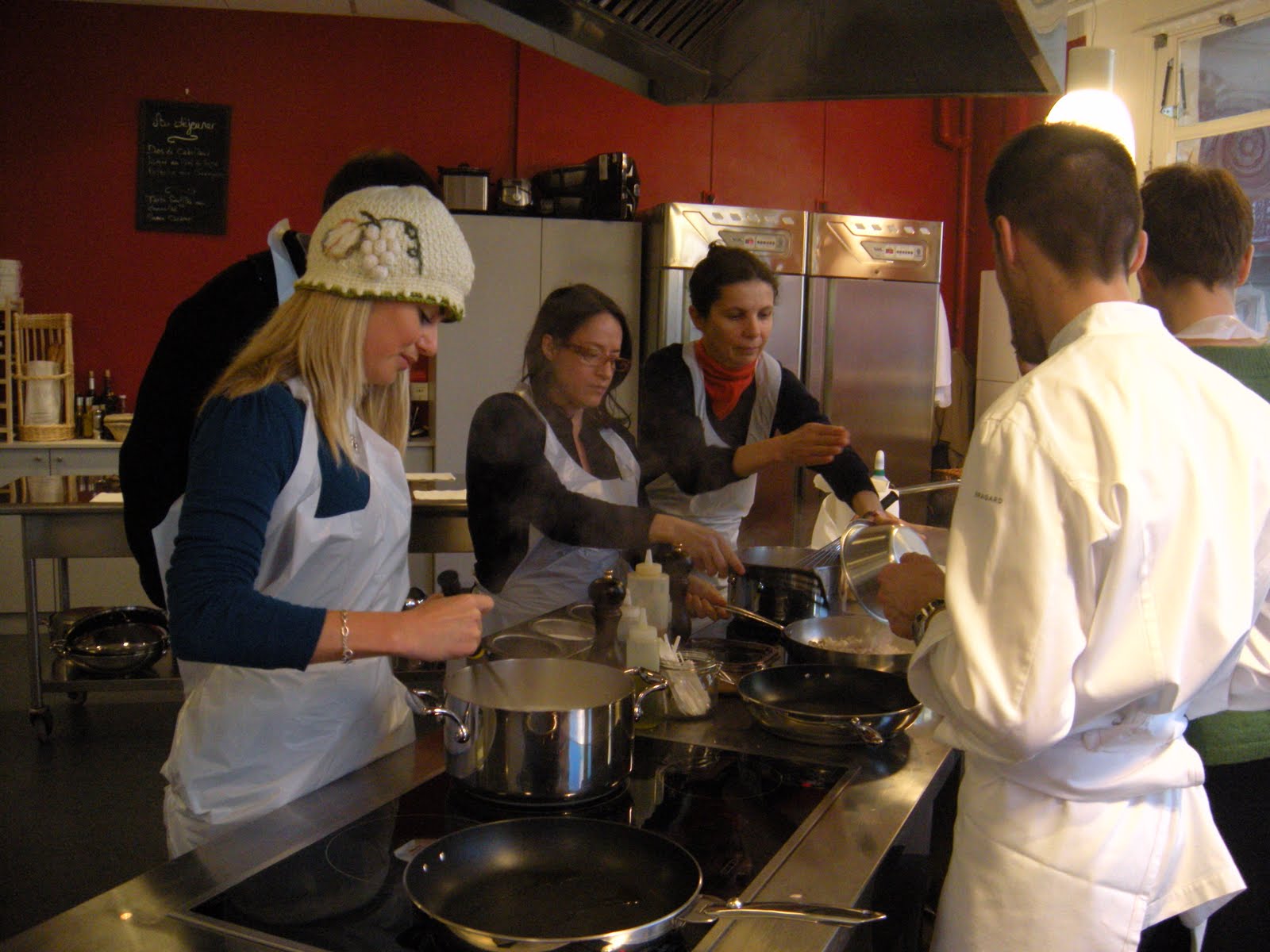
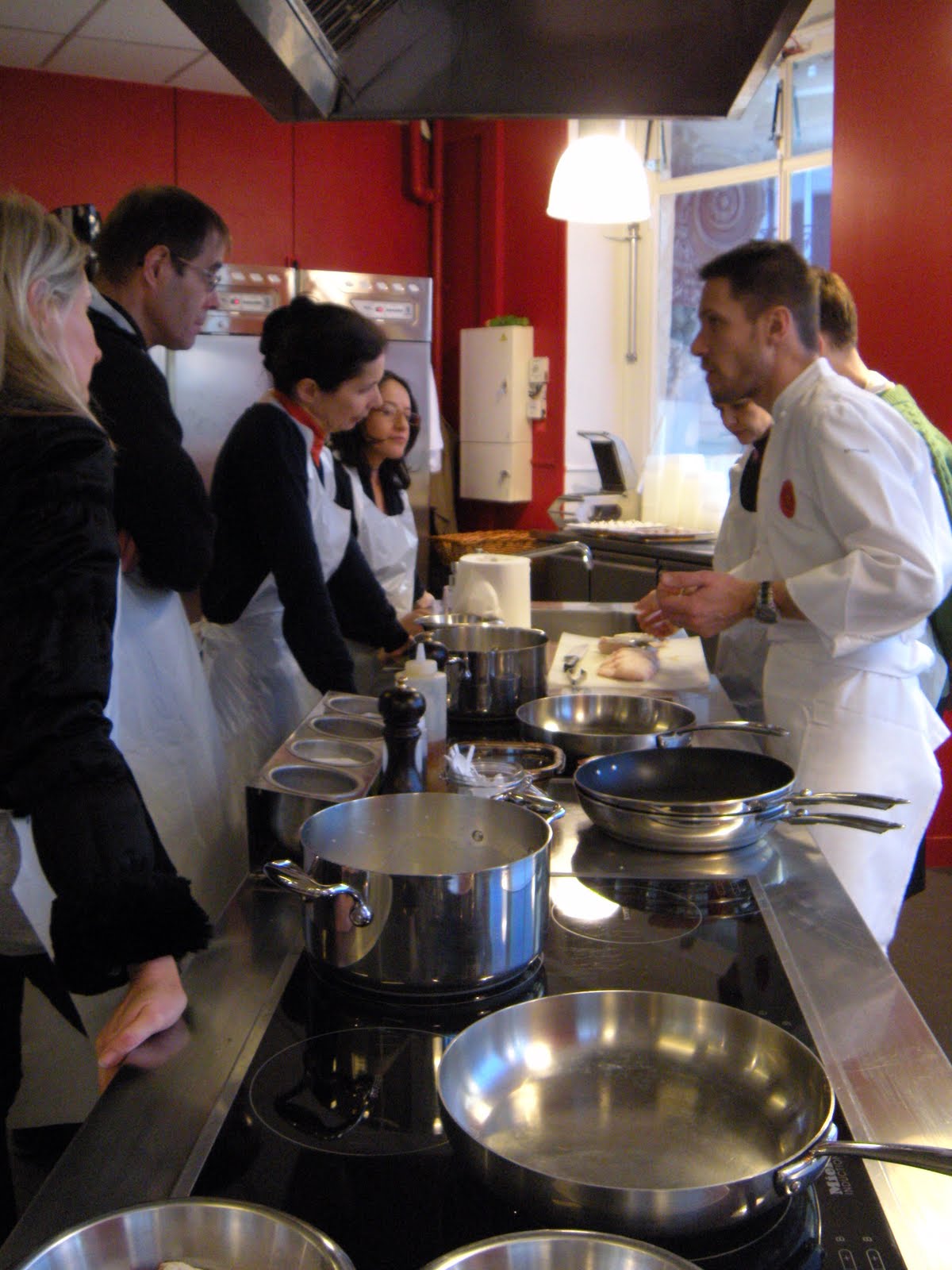
Ally and I participated in what I consider to be one of the best values in Paris today at Ateliers Des Chefs. There are six locations scattered about the city, and for €15, we cooked our way through a quick (30-minute) lunch menu in a rather chic demonstration kitchen at the BHV on Rivoli near Hotel de Ville. There were only seven us in the class, which meant it was pretty hands-on, and easy to take notes and follow along, especially since the classes are conducted in French.

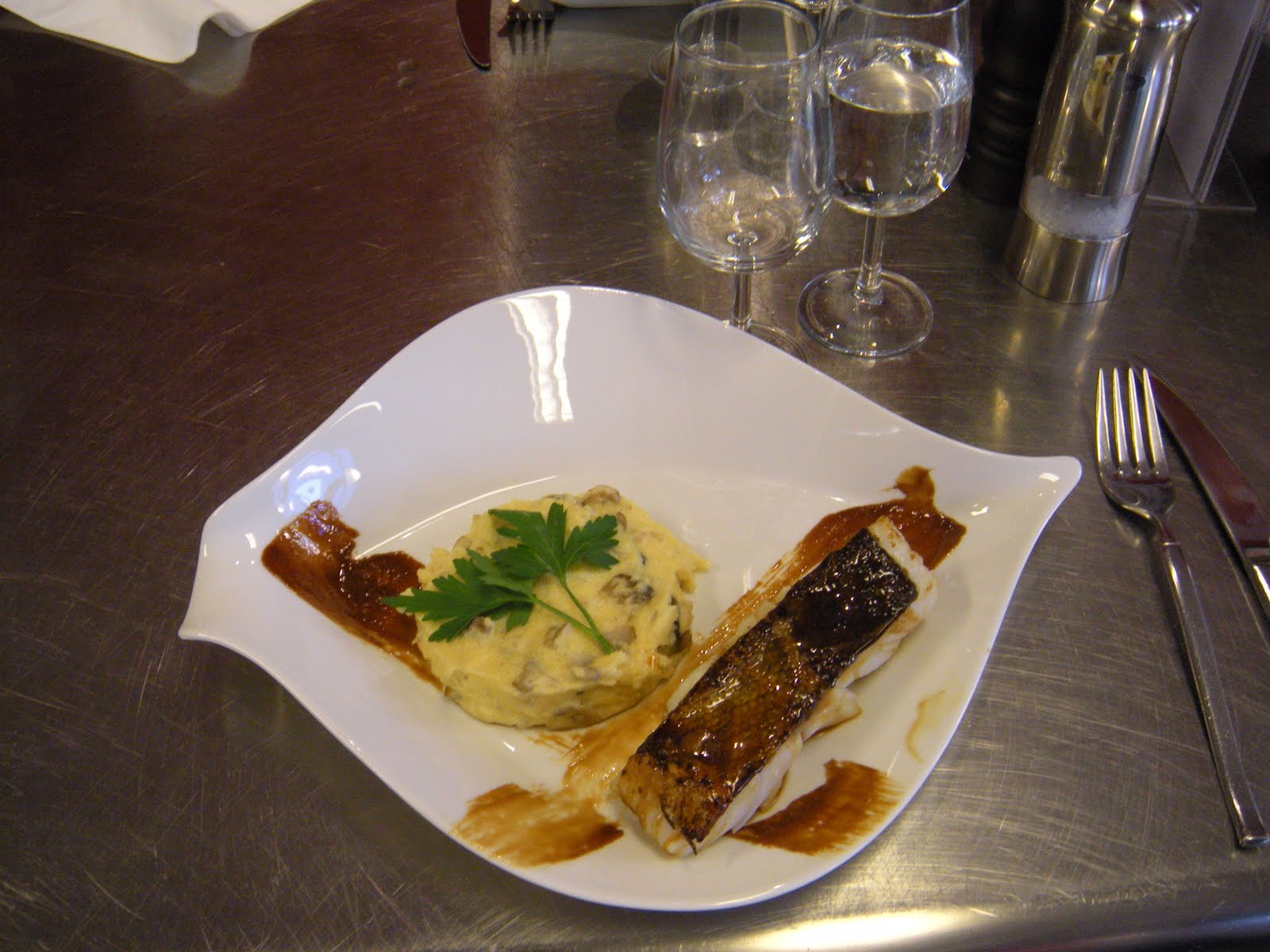
Menu: Codfish with a Honey-Soy Glaze and Polenta with Mushrooms

This menu was as easy as it sounds, and if you can understand French, these classes are a huge bargain. The menu was simple and truly done in 30 minutes (where were you on this one, Rachel Ray?), and the food wonderful when we sat down to lunch with the rest of our class.

Ateliers des Chefs
www.ateliersdeschefs.fr

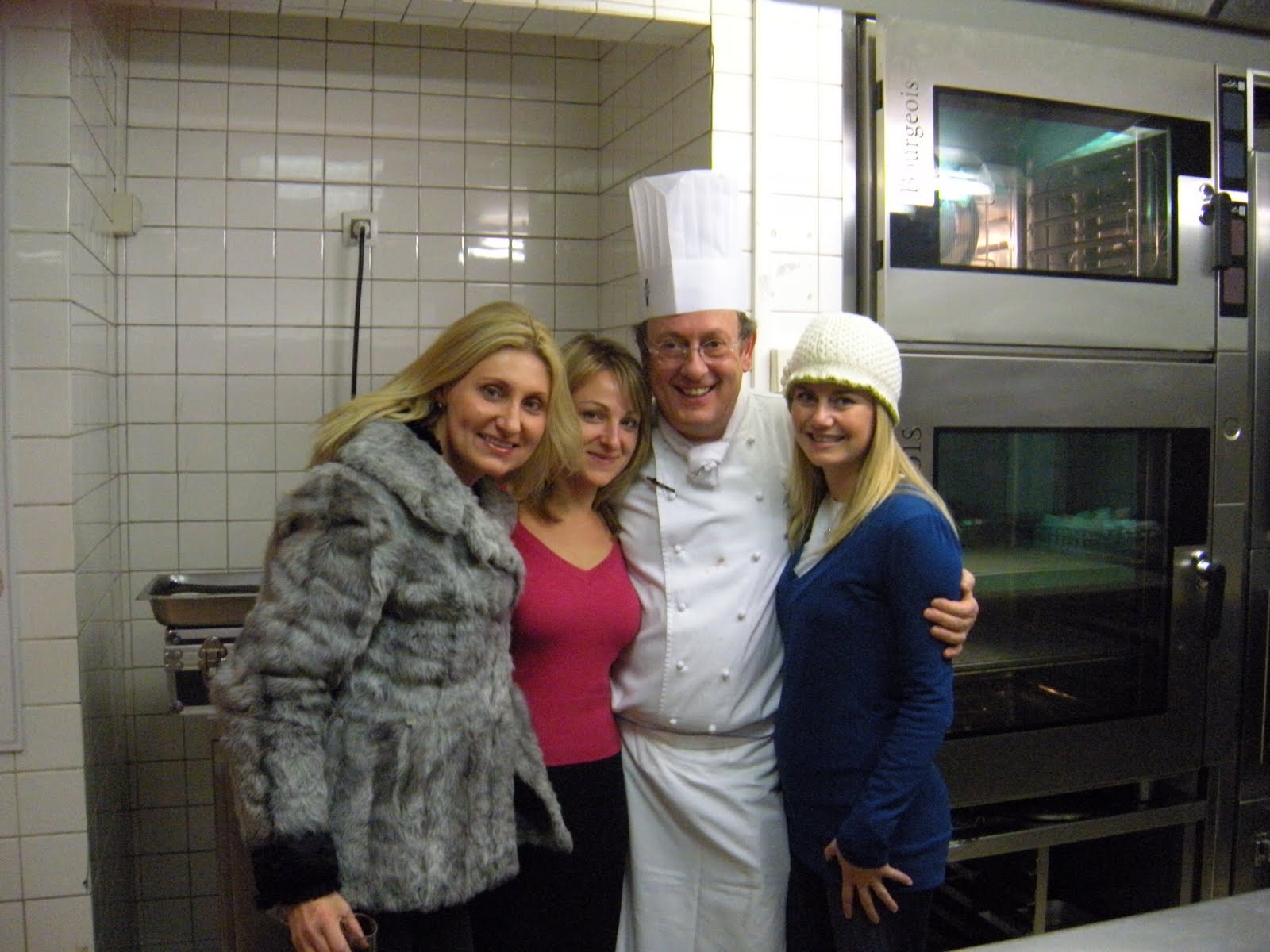
In the evening, Ally, Leila and I moved from one side of Paris to the 15th, home to the colorfully named culinary school, Le Cordon Bleu. It’s on a pretty residential side street, and if you weren’t looking for it, you’ll probably walk right past. In our second class of the day, however, we would get very familiar with butter, heavy cream, and milk on repeat in some version of that order. This was An evening In Honor of Julia Child.

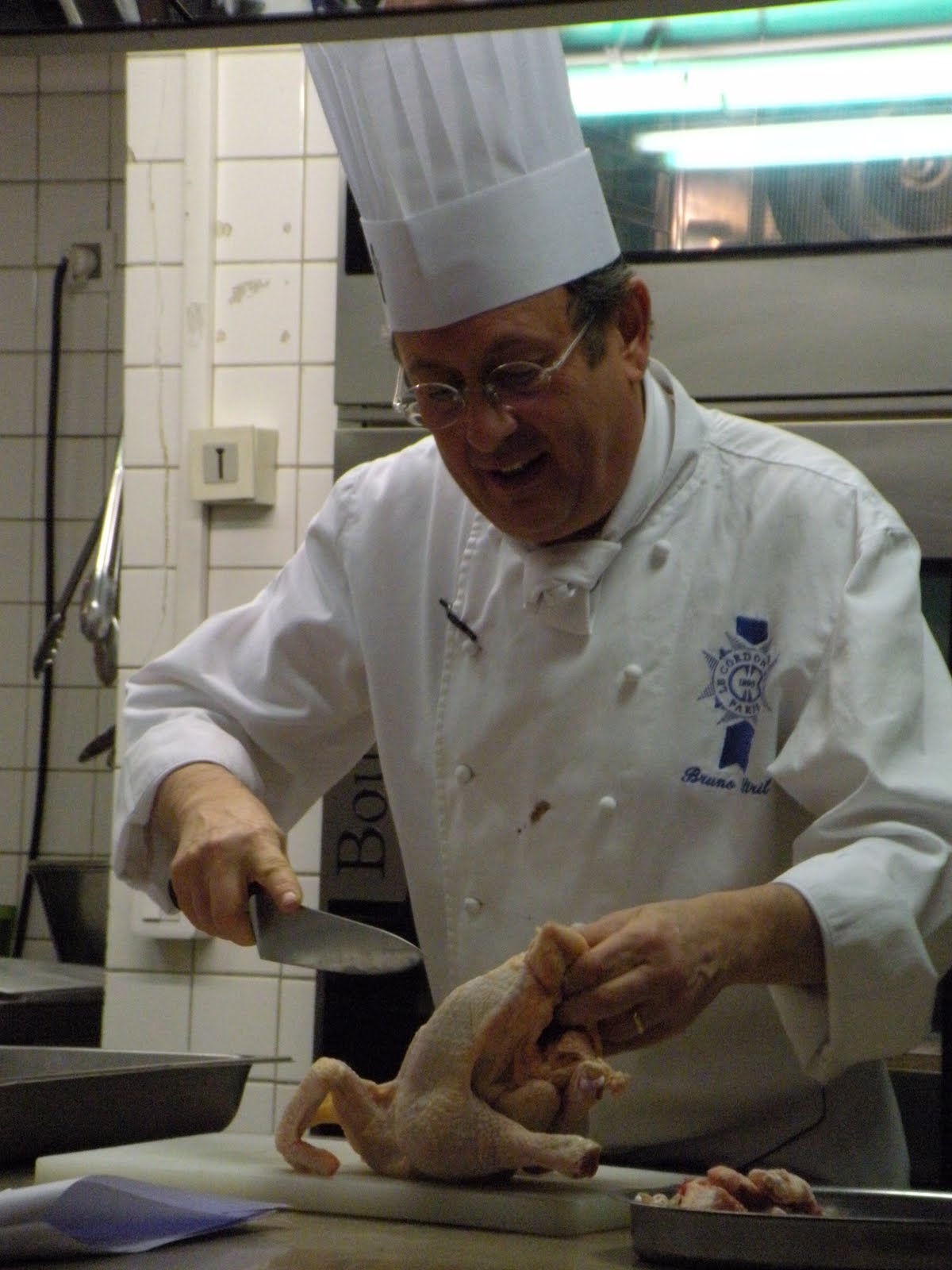
Entirely demonstration-based, the class at Le Cordon Bleu was three hours long. Chef Stril spoke only in French, but a translator was on-hand to assist the mainly English-speaking audience.

Menu: Coquilles St.-Jacques a La Parisienne, Fricassée de Poulet a L’Estragon, and Soufflé au Chocolate a L’Ancienne

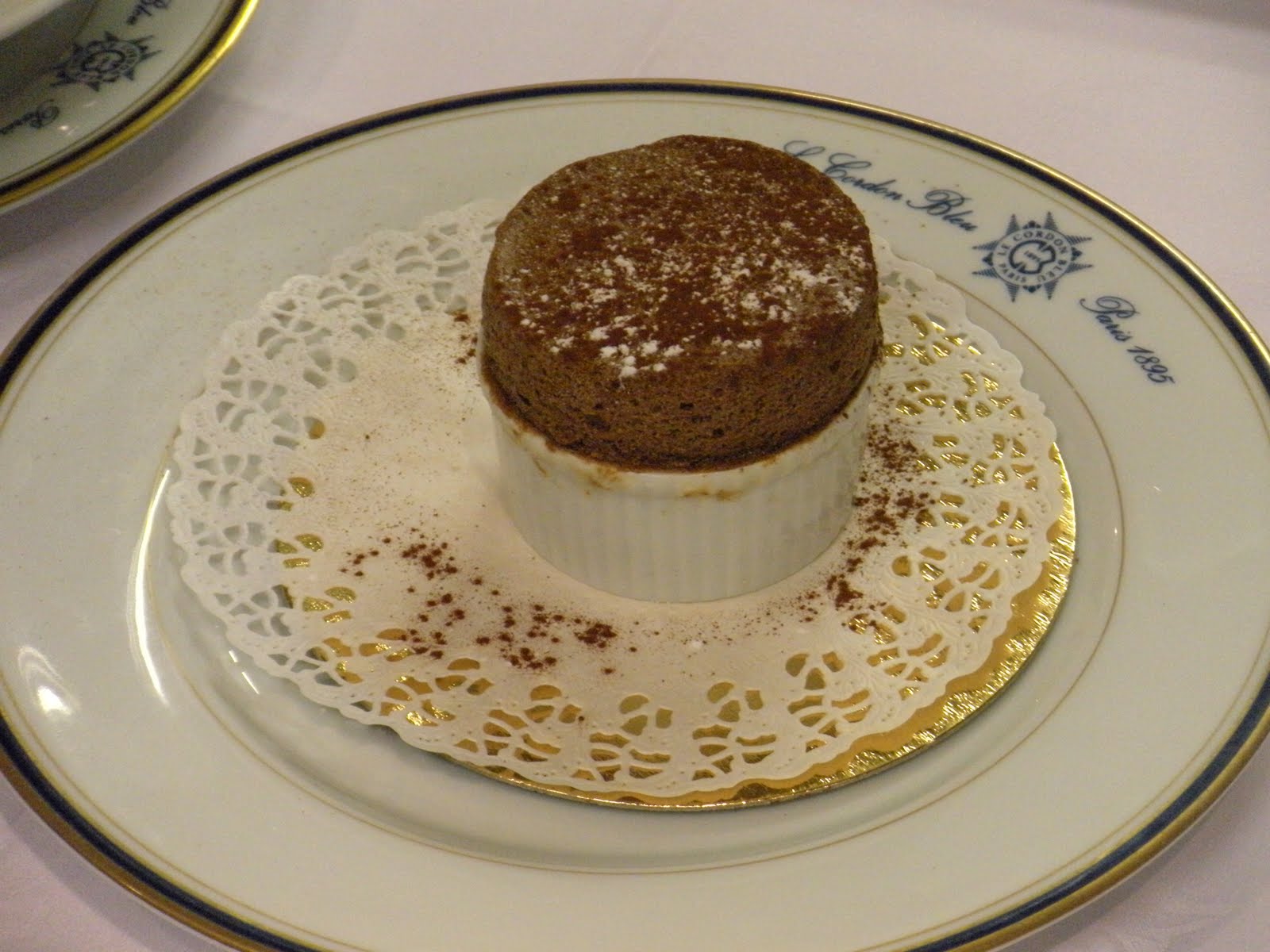
We started out by making the pastry cream for the soufflé, and I have to say, I don’t consider the art of the soufflé nearly the death-defying feat I did in the past. Would I call this dish easy or fit for a beginner? Not a chance. But Chef did make it look easy. And all soufflés are bound to fall, so if that’s your hang-up, break out the ramekins and let it go. Chef Stril couldn’t be bothered as the air went out of his chocolate towers; he just opened another bottle of wine. C’est la vie, I suppose…

From there, we learned the proper way to segment a chicken into eight pieces for our chicken with tarragon sauce. Chef made quick work of removing the spine, and at dinner after (I should mention this class only resulted in Barbie-sized tasting plates..and wine…there was wine…), we all agreed that this was a skill definitely developed over time. And this dish took time. 

He browned the chicken, then removed it, then used the chicken fat that had rendered off as the base for the sauce. We learned the right (and easy) method to peel a tomato, and then watched as two assistants diced them into uniform pieces for the Chef. He told us how there is always veal stock bubbling away in the Le Cordon Bleu kitchen downstairs because it’s involved in so many of their preparations; that went into the dish too. And we learned how to make a pot lid from parchment paper, which put our dish out of sight and mind while he worked on the scallops and potato cakes.

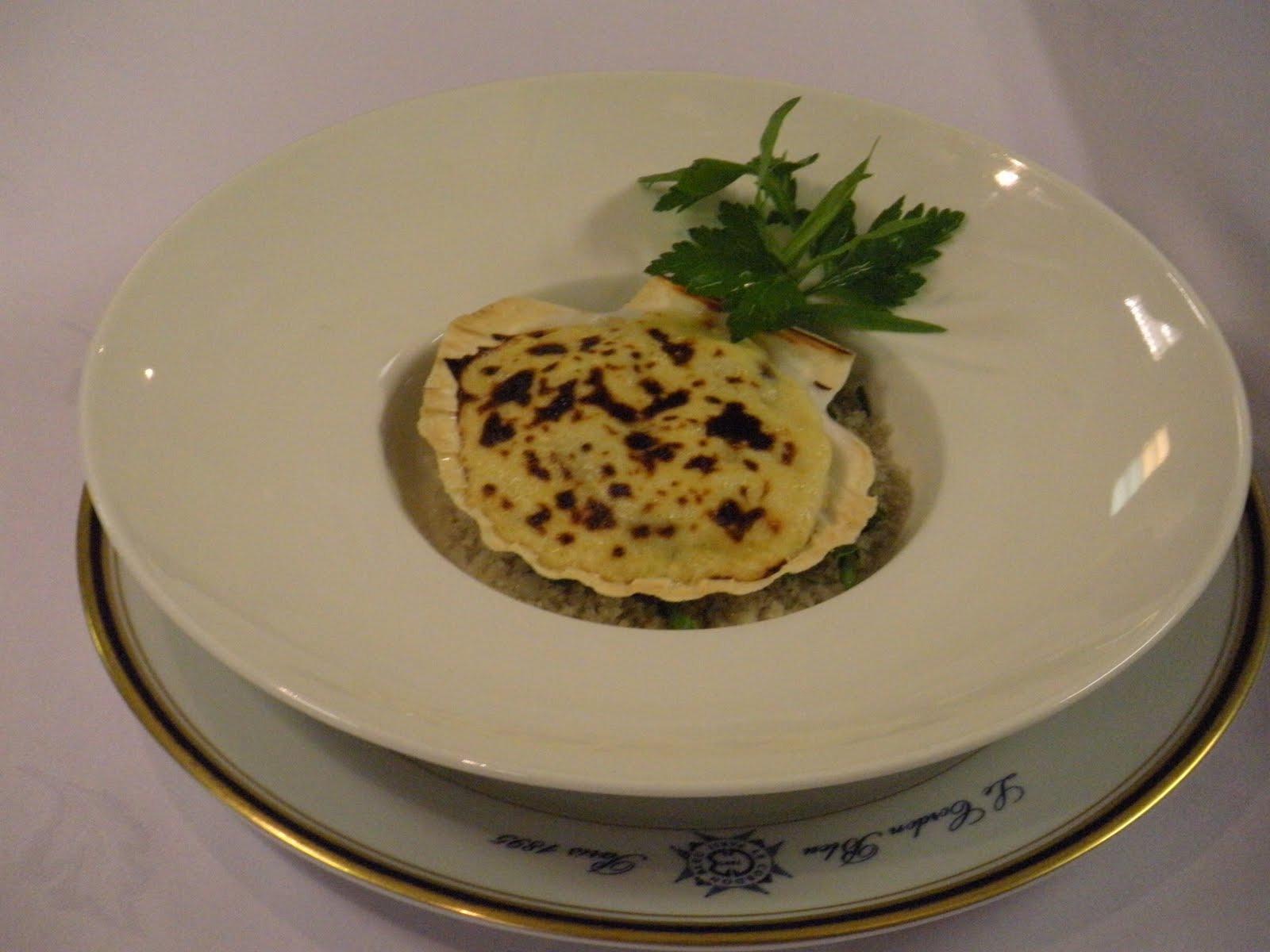
Our next dish was quite “Republican,” as someone I know likes to say: scallops and mushrooms in a white wine béchamel-style sauce served on the half-shell. This was the star of Chef Stril’s show; we all agreed on that. He opened up the scallop shells to access the meat, and kept the coral egg sack as part of this dish. It’s a gorgeous hue, but I didn’t have any on my plate and probably would have skipped it. After sautéing the scallops until they were only cooked part of the way through, he sliced them into 3mm disks and set them aside. He added shallots and sliced mushrooms to their pan, and then deglazed with white wine and added cream. At this point, he got started on the sauce. Butter, heavy cream, milk, and more, more, more of it all went into the sauce, and at the end, he tempered in egg yolks to help the dish brown under the salamander.

The result, a feast for the eyes and mouth. A buttered shell, a scoop of the creamy mushroom mixture, sliced scallops atop, and a slather of the béchamel to cover the shell. Under the salamander (a broiler would work too) for about five minutes, and Chef Stril had made somewhat quick work of the Coquilles St.-Jacques. I almost dove onto the table for the example one. It was that good.

I can see why they don’t let the audience participate in a menu like this one. It took our Chef about two-and-a-half hours to get this together and he’s been doing it for 40 years. It was a great learning experience though, and since it is hands-off, anyone could participate and have fun…young, old, or food-fearing.

Le Cordon Bleu
www.cordonbleu.edu

Next Stop: Italy

Lord Byron Says…

Posted on

“Lobster salad and champagne are the only things a woman should ever been seen eating.” I agree to disagree, Lord. 

Women should also be seen eating Maille mustard , macarons from Laduree, falafels on Rue de Rosiers, and drinking wine from baby bottles at Refuges des Fondues. Why? Because all of those things happened yesterday in Paris as Ally and I criss-crossed the city in search of vintage fur coats. We found them. 

Next Stop: 
Two Cooking Classes on Tuesday…
Ateliers des Chefs & 
Le Cordon Bleu

Happy Valentine’s Day

Posted on
A certain Senator turned me on to a particular rosé wine called Domaines Ott. It’s from the south of France, and that sweet, sweet nectar should be required in the south of California as the 6th food group.

Ally and I picked up a bottle in St. Germain near Notre Dame to enjoy over our homemade dinner tonight of pesto pasta (and a caprese salad for me) at the apartment. It was our attempt to channel southern France in a climate that more closely resembles the north pole.

Happy Valentine’s Day to everyone from Paris…the city of love, Valentine’s-colored wine, and completely frigid weather. And of course, thank you to my Senator who enjoyed his own bottle today satellite-Valentine’s-style in sunny southern California.

Madrid On the Go

Posted on
Buenos dias, Madrid! I decided I’d write this blog today in a different format: on the go. Why? Because, again, I’m in a city without a cooking class, so I plan to maximize my day-point-five here by walking around and getting to some restaurants and markets I missed in October. I’m so happy to be back here. I really love this city.

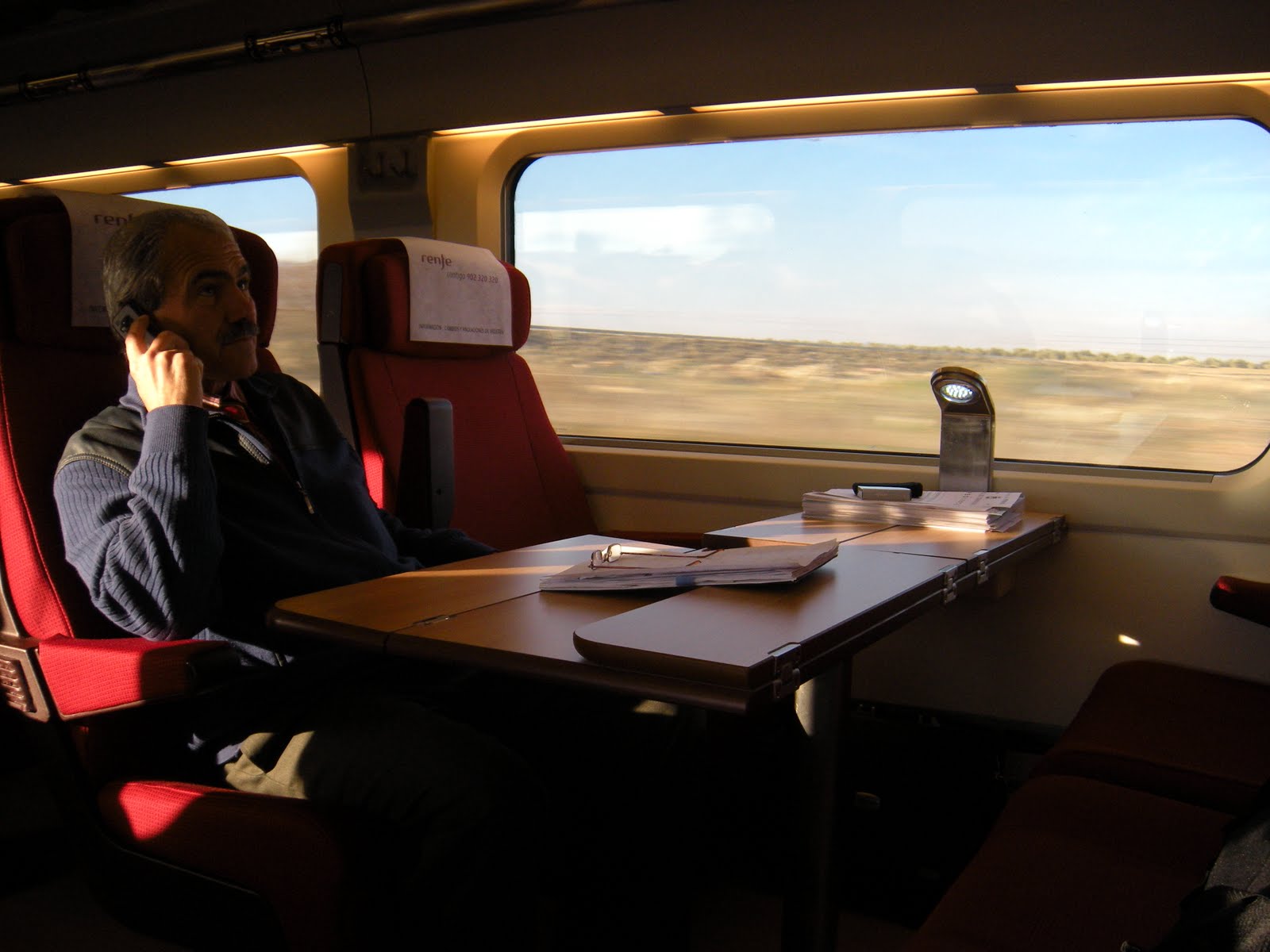
I arrived on the highspeed AVE train from Sevilla at 10:00 this morning (early, I might add), and if anyone is considering traveling between the two cities, you won’t be sorry if you take this train. Modern is an understatement. The seats were as big as business class on a 747, and along the left-hand side of the train, it was single seats only at the window. That’s where I enjoyed Slumdog Millionaire from as we whisked along the rails for the 2.5-hour journey. Cake.

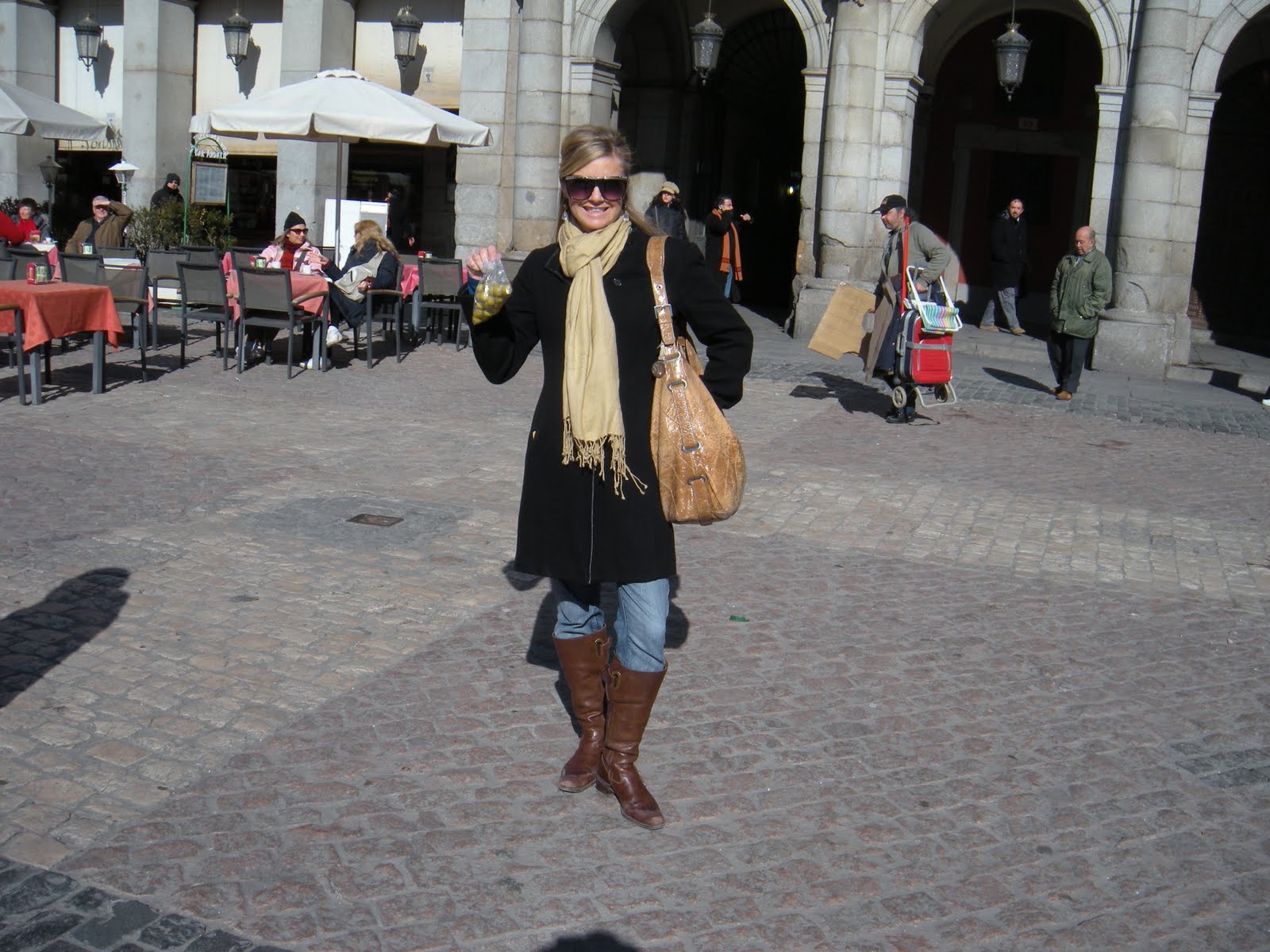
So, where am I right now? Well, I’m sitting in the Mercado de San Miguel off Plaza Mayor. I just helped myself to two pieces of Manchego cheese on toast and a glass of red wine, and I’m watching Madrid live around me. This is actually my second market of the day. Just down from where I’m staying is Mercado Anton Martin. It’s pretty traditional and has all the requisite stalls of a normal European market. There, I bought a bag of green olives from Sevilla for €1.75, and they will be my co-pilots on my journey today as I guide myself around the city. Let’s go olives…we’re hitting the road.

Next Stop: Casa del Abuelo for the shrimp in garlic oil tapa
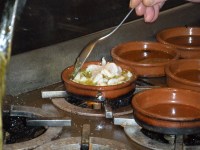
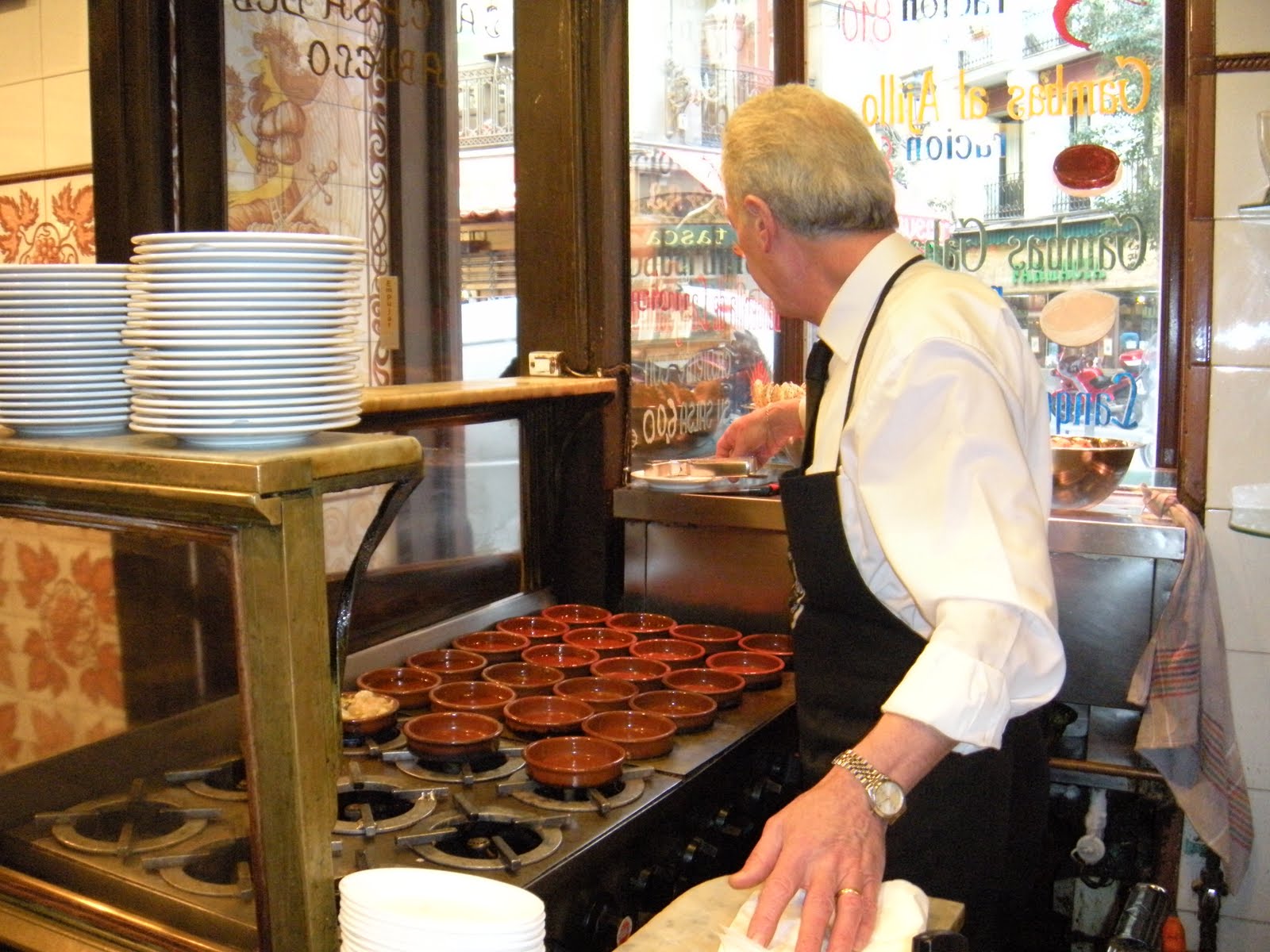
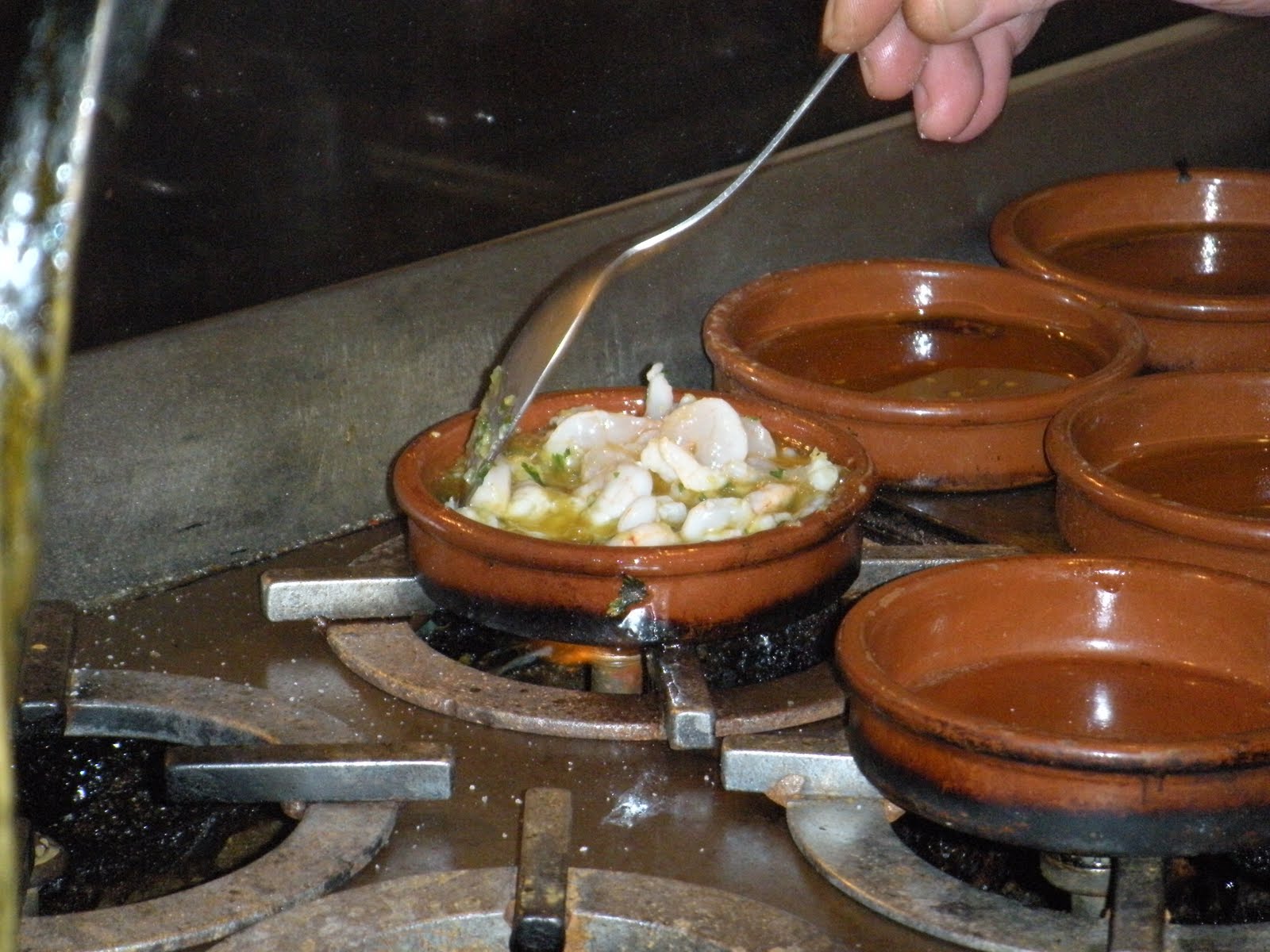
I don’t even know where to begin about the Gambas a Ajillo at Abuelo. They were spicy, buttery, and I can’t even figure out how that combination is possible, especially since they have no butter in them. In a ceramic dish over an open flame, the man sautéed baby shrimp in olive oil and garlic with a red chili. C’est tout. The taste had me almost drinking the remnants in the ramekin. The restaurant was so small, but actually has two locations, the other at the wedge of Calle de Nunez de Arce and Calle La Cruz, where they serve only drinks and traditional Iberian ham.

The master cutter (no, not an emo with eyeliner) started talking to me over my shrimp, and invited me across the street to try their ham. I obliged and watched a DVD about how the ham from these particular pigs are different: they’re black with longer snouts, floppy ears, and the environment in which they nosh on acorns, which gives them their marble, is totally natural. This ham is actually good for you. Over ham and more Abuelo wine, he and I chatted about his experiences working as a ham cutter at Harrod’s in London under Al Fayed, and also working with chefs like Gordon Ramsay and Jaime Oliver. Where do I find these people? There are no seats at either Abuelo…it’s standing room only, but well worth the €13.30 I spent on three Dixie glasses of good wine, the shrimp, and my ham tasting. I think I was given a guapa discount though.

Casa del Abuelo
C/ de Nunez de Arce 5

Next Stop: Dubliners Irish Pub…in search of the Romanian bartender Court & I met in October

Well, he’s not here, and I just wanted to say hi. Evidently, he works at the bar around the corner now where Court and I bought the blue light glasses. It’s closed right now, but don’t worry–the Coronitas still flow freely here, and are served in buckets if you need a dose of Cabo in the 35-degree weather.

Dubliners
C/  Espoz y Minas

Next Stop: Lhardy Pasteleria

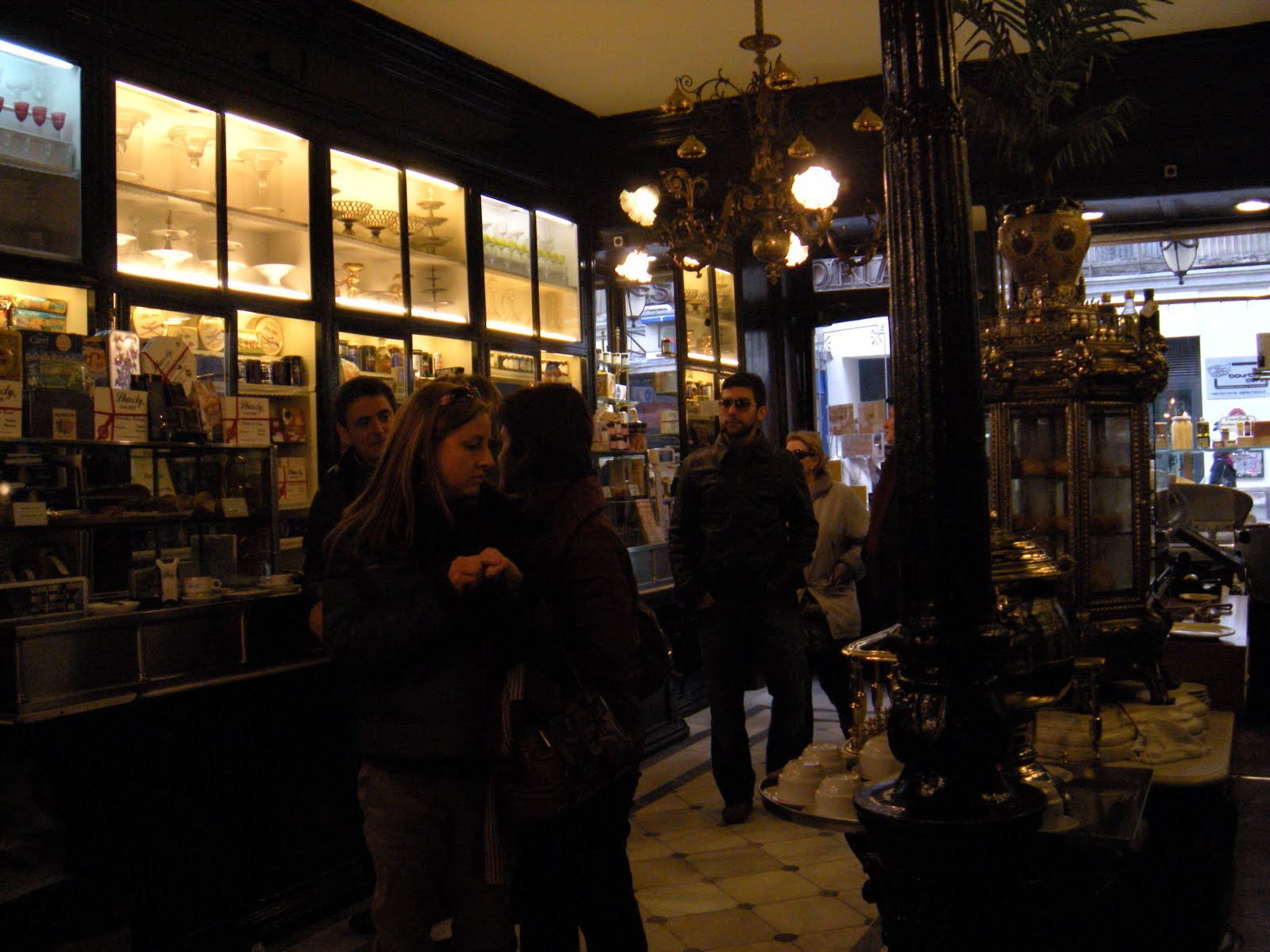
Right around the corner from Dubliners and Abuelo was Lhardy Pasteleria. Their aprons were embroidered with the date 1832, so clearly this place was old. And again, tiny. Different from other places in Madrid, Lhardy is a serve-yourself place where you can sample different strong wines, consommés, and other aperativs. For €2.50, I sampled a tiny glass of Madera wine. It was very strong, and a bit sweet for my liking, but I did like the ambiance in this place. Again, nowhere to sit, but you could tell it wasn’t a place where people linger for long. They’d have a drink, and maybe a snack, and then move on to the next destination. For me, it was Sephora to borrow a bit of the new Marc Jacobs fragrance.

Lhardy Pasteleria
Carrera de San Jerónimo, 8

Next Stop: Siesta

Back at the hostel, I slept off  the earlier part of the day in an attempt to ward off fatigue for the evening. It worked.

Next Stop: Plaza Mayor for Carnivale

This was interesting. A man suspended in the air playing a piano as random images and movies were projected on to the top of the piano for the audience to see. I didn’t last long here.

Next Stop: La Negra Tomasa

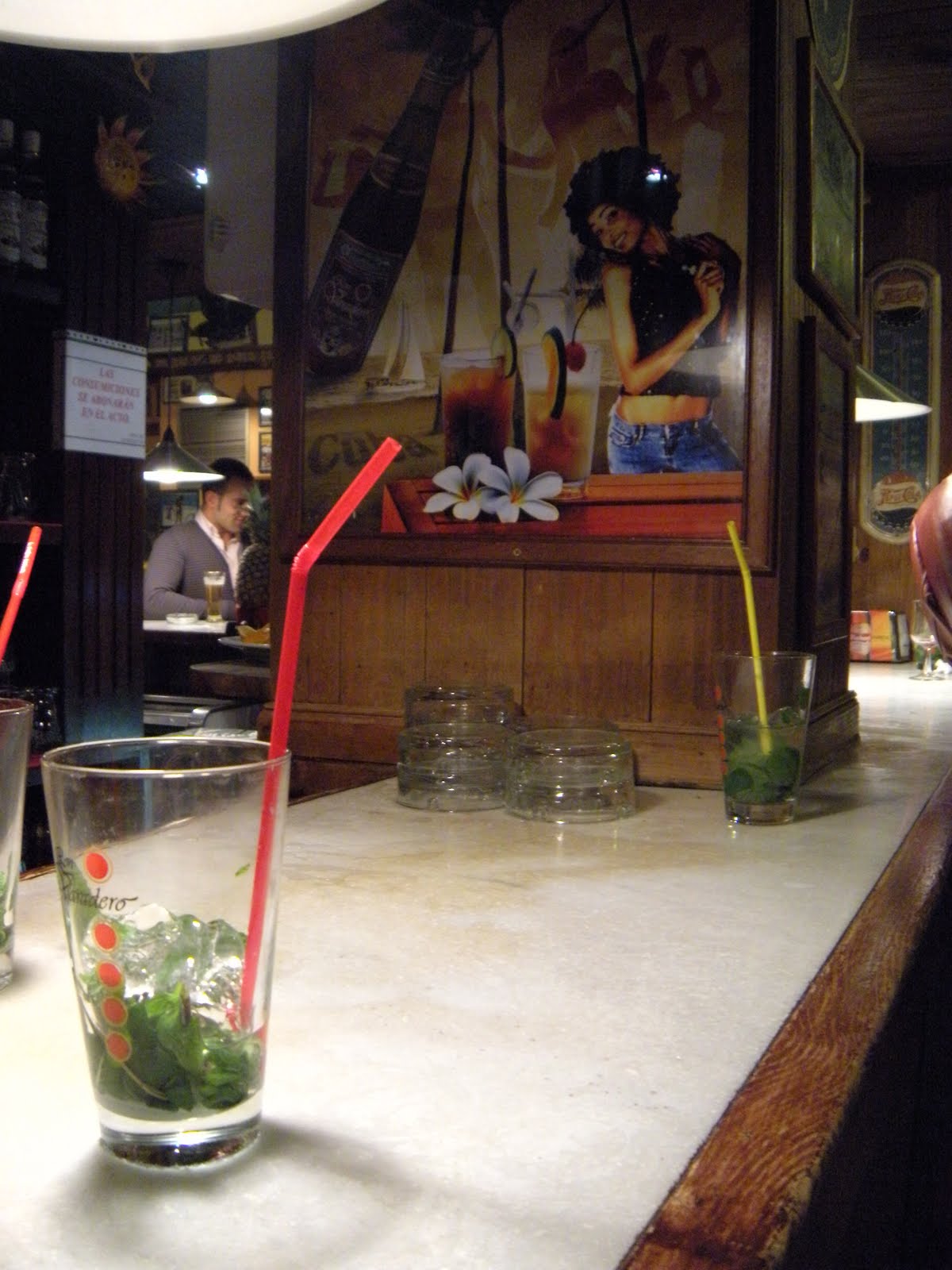
La Negra Tomasa is a typical Cuban themed bar. In true Bolivian fashion (thank you to my hostel mate from Argentina for informing me of this euphamism), the walls were littered with license plates and posters. And of course, everyone, including me, was drinking mojitos. It was good, but not great. The one in Barcelona trumped it ten-fold. Also, there was supposed to be live, Cuban jazz, but that was nowhere to be found. Perhaps it started later. Time to move on.

La Negra Tomasa
C/ Espoz y Minas (directly across the street from Dubliners)

Next Stop: O’Reilly’s

‘Two Irish pubs in one day?’, you’re asking yourself. The answer is yes. I was determined to find the Romanian bartender, and I did at O’Reilly’s just like the man at Dubliners promised me. It was meant to be a momentary blip on the radar screen, but of course I stayed all night. He nearly jumped over the bar when he saw me, and was pretty shocked to see me back in Madrid. We caught up, I gave him my Essential Book of Foreign Swear Words, we passed it around the bar and everyone cracked up, ate some Nestle Crunch bar, and of course, drank too many beers compliments of the Bristol rugby team (hope they win today). I wouldn’t be making it to the color-changing toilets this evening; no way, no how. Back to the hostel, and into bed quietly to recoup my energy for my last day in Espagna.

€39.50 total for the day (roughly $53). Not bad for a 15-hour day…

Next Stop: Back to Paris for a few days to meet up with Ally!
Cooking Class #4: Setting the Table Sevilla Style

Posted on

“In true fashion, most people don’t decide what they want to be until they’re 30 or so.” ~ Ruth Roberts


Could Ruth, my instructor, today have been more spot on in validating the reason for this adventure? This was her response when I asked her how she got started cooking. Her background in the sport was marbled like a good piece of meat. She took a class in France, and landed a job cooking elaborate lunches for bankers in Madrid. As she told me, a lot of the skill in cooking comes from learning as you go, and I’d learn a notebook full in my class today in Sevilla. There will be tips in this particular blog, so keep reading if you’re interesting in learning what they are!
We started out at the market, and decided on a menu of Tapenade de Aceitunas Verdes y Almendras (olive and almond tapenade), Gambas Al Ajillo (prawns in garlic oil), Razor and Regular Clams,  Escalivada con Salsa Romesco (baked vegetables with a vinaigrette and romesco sauce), and Dorada a la Sal (Sea Bream baked in a salt crust). Our sweet was Mantecados, a traditional Spanish powdered sugar cookie. 

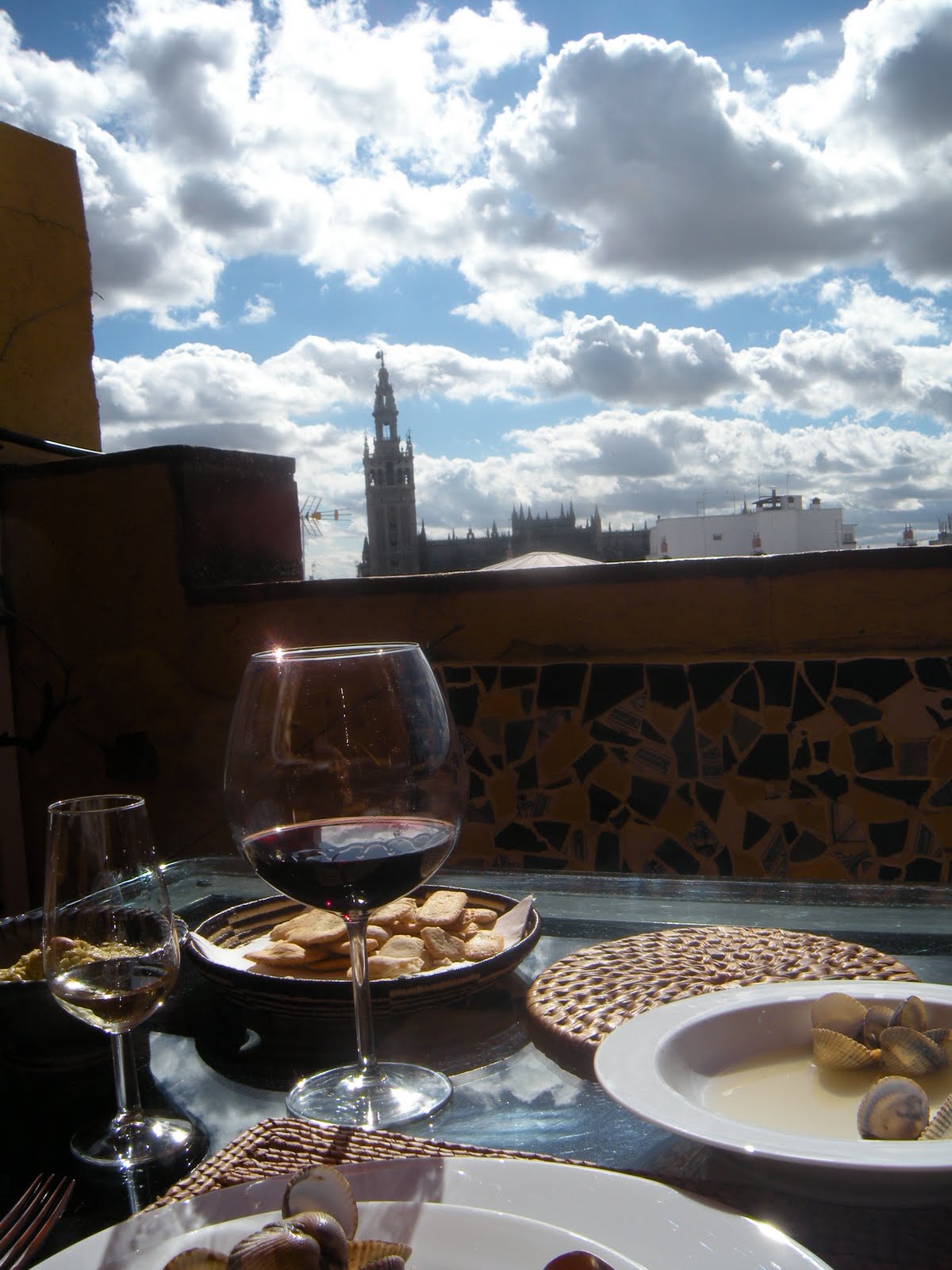
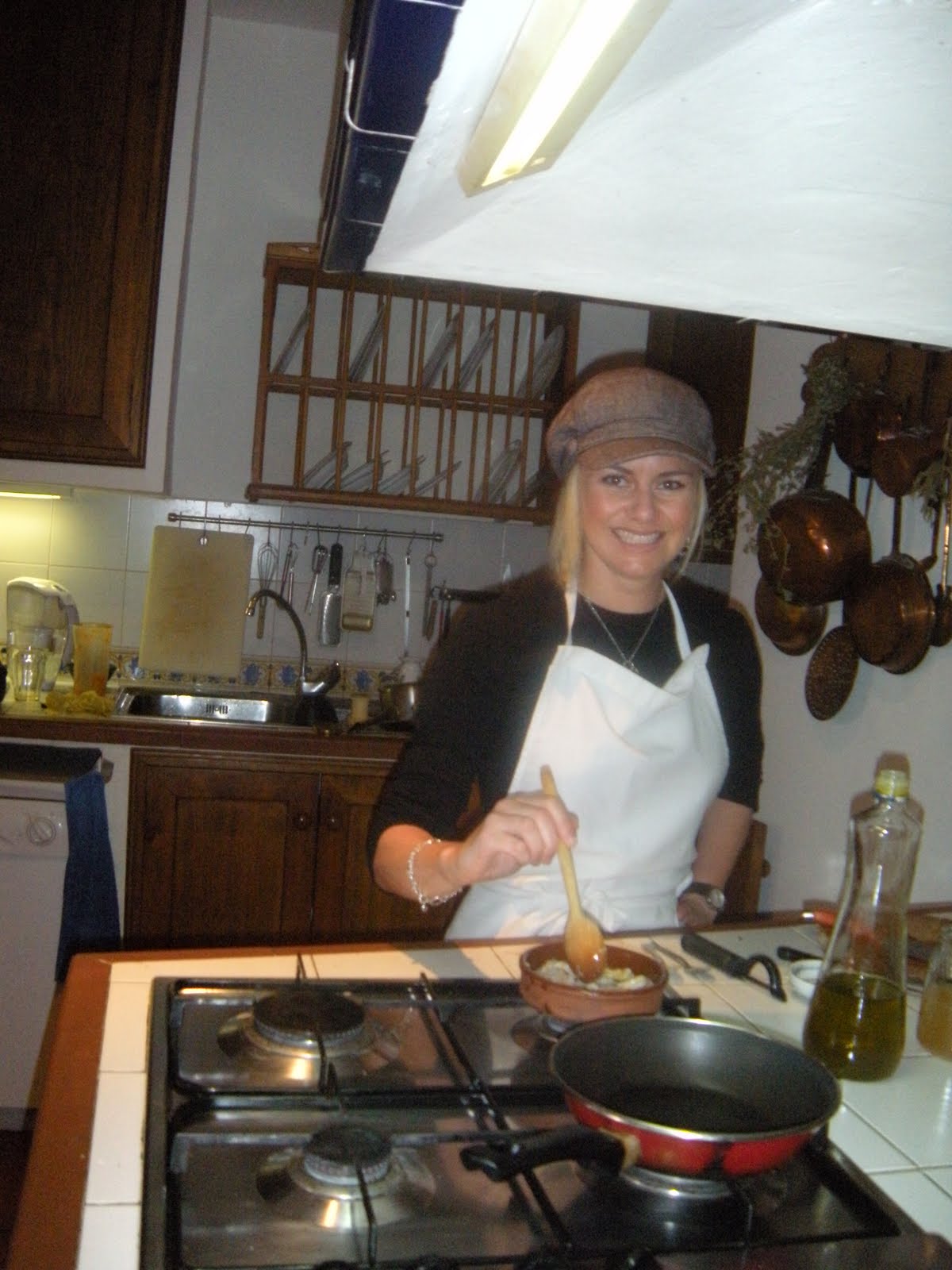
After carting our loot home, we got straight to work in Ruth’s kitchen. Her home was beautiful, and the view was amazing on a day when the sun finally decided to show his face. The cumulus clouds were a perfect contrast to the bright, blue sky, and the skyline a perfect backdrop for our lunch on the terrace. 


Now, for the tips and information:  

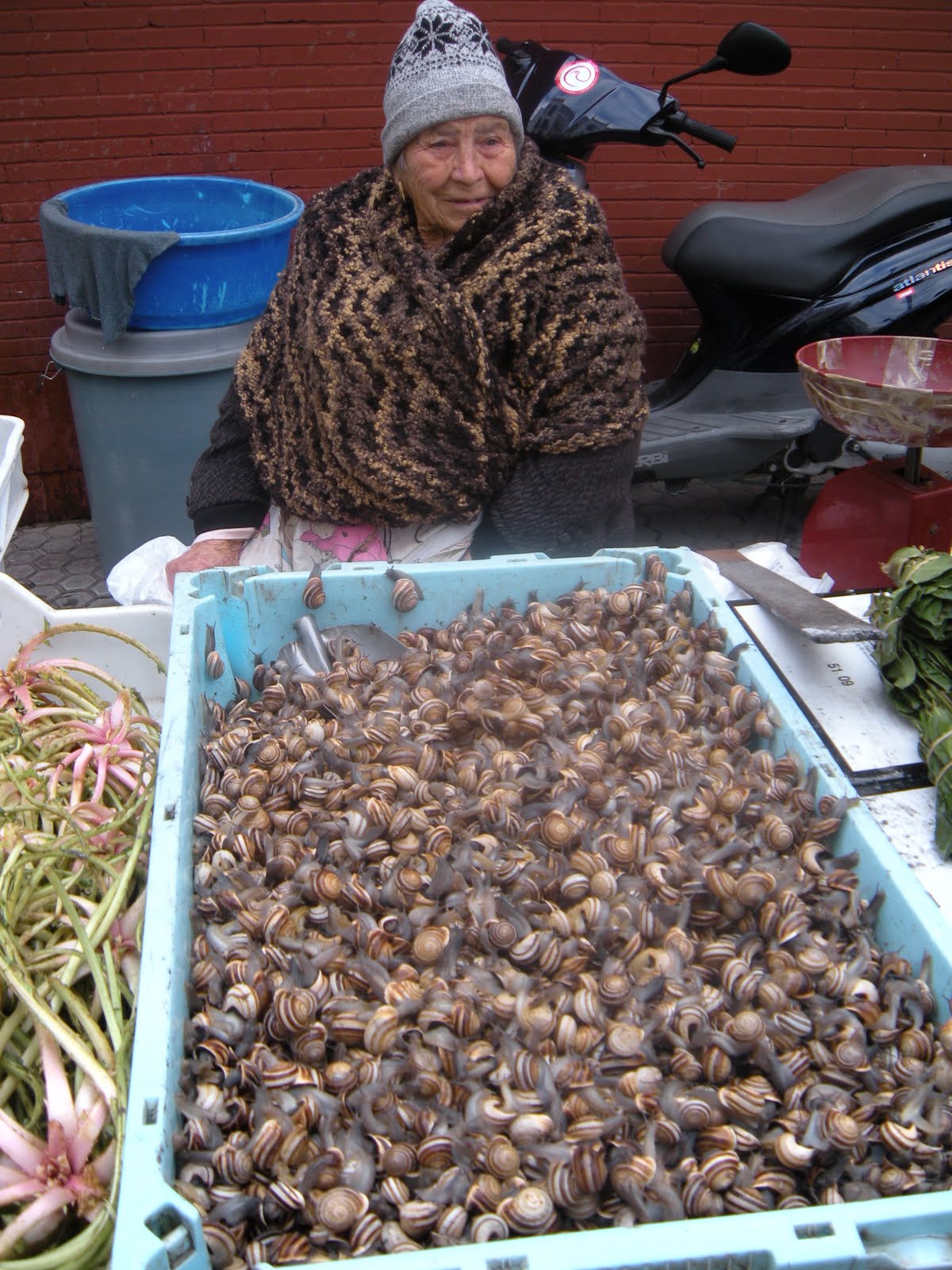
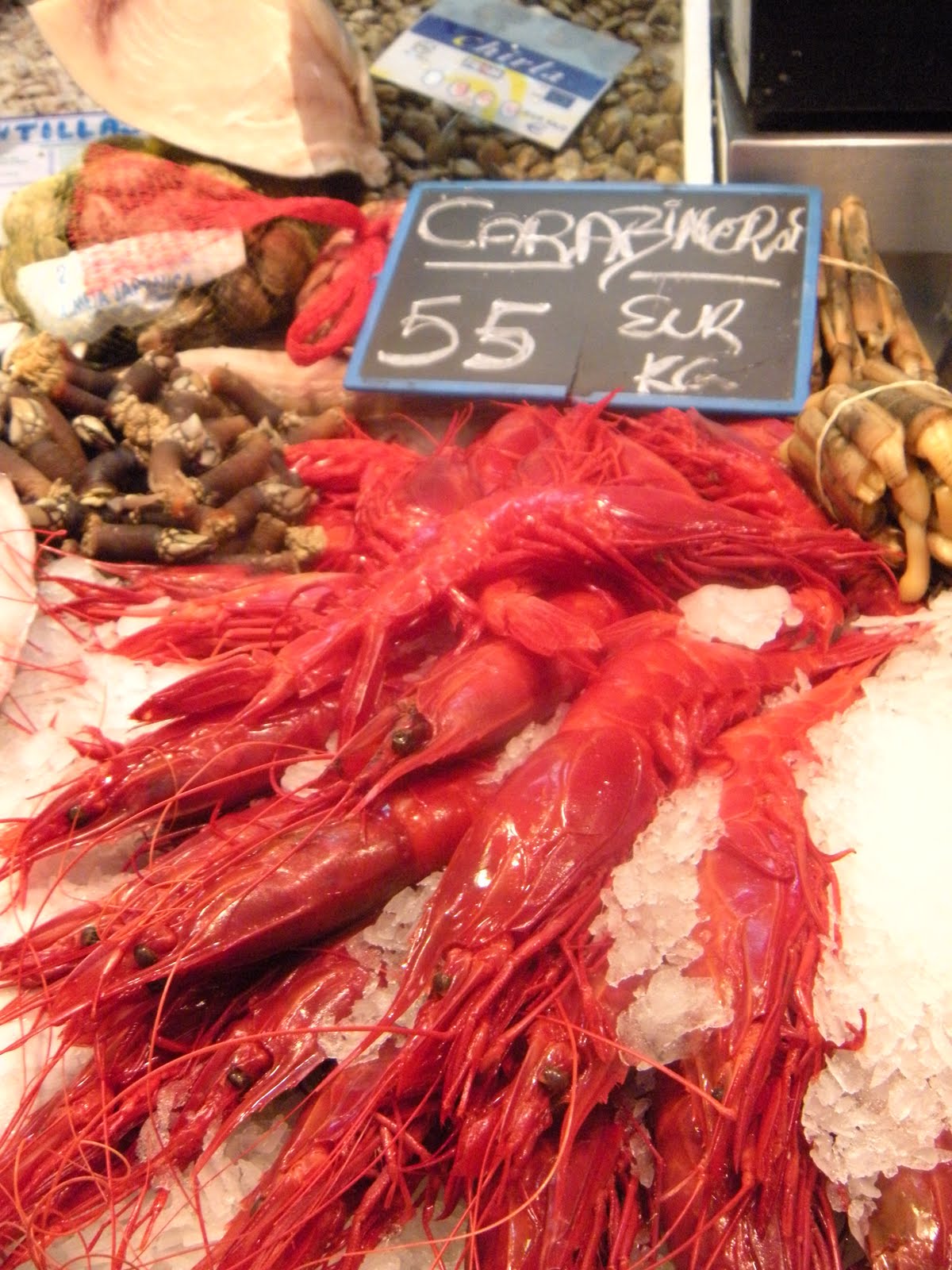
  • In Sevilla, they eat TONS of fish. Most of the stalls at the market were fresh fish mongers, and popular varietals include baby shark, cuttlefish, dorada (this is what we made), razor clams, monkfish, hake, swordfish, and more. If you don’t like fish, don’t come to Sevilla. You’ll be bummed!
  • When roasting whole eggplants (or aubergines), prick them before putting them into the oven. If you don’t, it will explode and you’ll spend more time than you care to know cleaning it up.
  • Do you know how to peel a whole, roasted pepper? After you remove it from the oven, wrap it in tinfoil and then in newspaper or a paper back to let it cool. The skin will peel right off. If you leave it out to cool, the skikn will stick back to the pepper.
  • Don’t discard the more tender unused artichoke leaves.  Boil them in water for about 10-15 minutes and strain out the leaves. The resulting water was really refreshing, and it’s good for your liver.
  • To make your own dried herbs, hang them to dry (like you would roses), or dry them in a lower oven. When they’re dry, strip them from their stems, grind them in a coffee grinder (I’ll be purchasing one of these and I hate coffee), and jar them. Fresh, dried herbs for years.
  • To make a proper stock (fish, meat, or veg), you should always start with cold water so the flavor comes out of what you’re boiling instead of getting trapped inside.

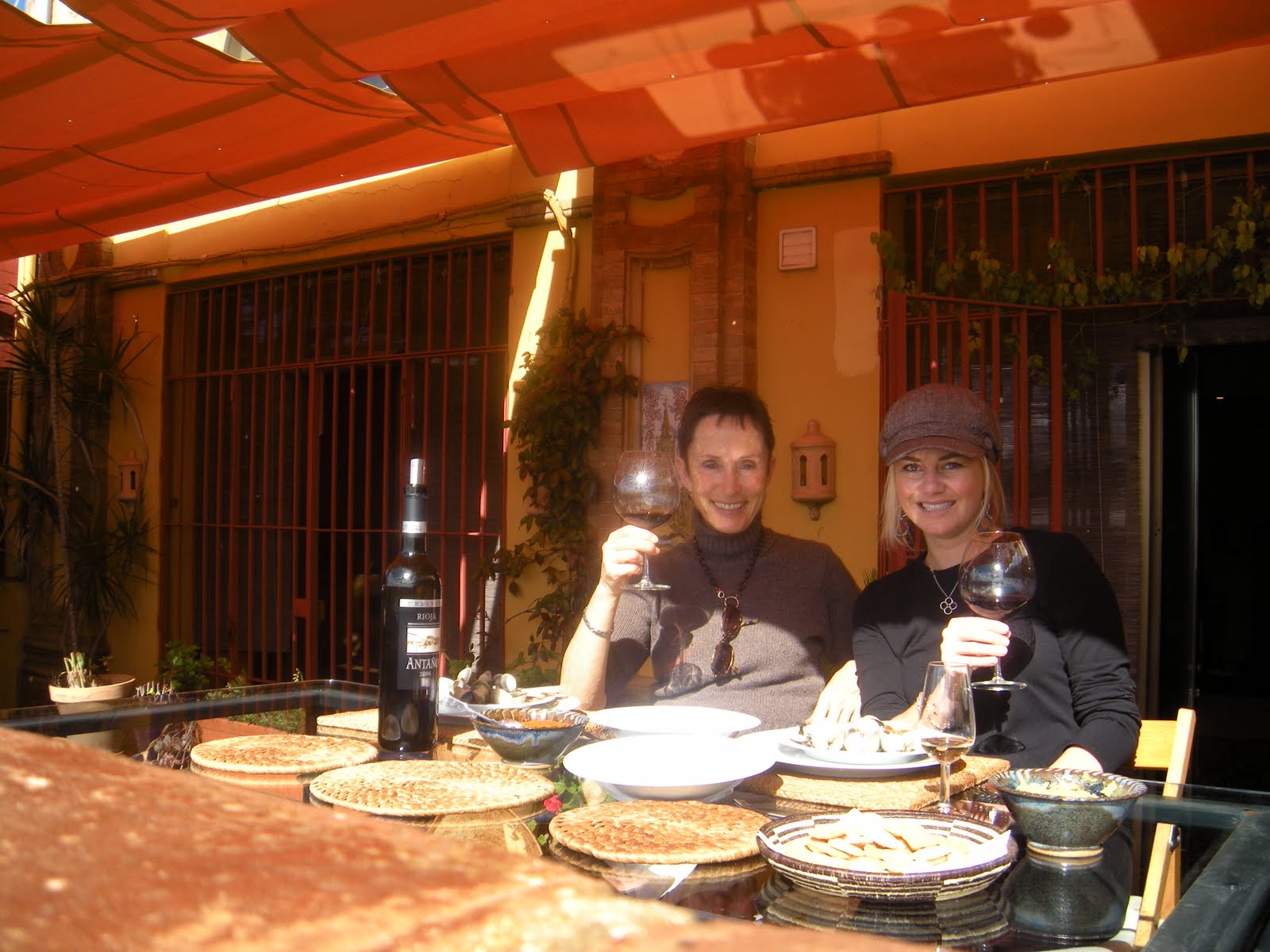
Ok, so that brings me to the end of the tips. As you can see, I learned a lot during this one-on-one lesson about Spanish cuisine, although it was more tailored to the cuisine of Sevilla. Dining on Ruth’s veranda over the meal we put together was phenomenal. Our menu was fresh, healthy, and most importantly, simple (it probably sounds much more elaborate than it was). I wouldn’t hesitate to entertain with this menu because of the speed with which it could be put together. With practice, I could have all of this done in an hour, I suppose.

Sevilla is absolutely gorgeous, and I wouldn’t hesitate to come back, although I’d caution you to take note of the weather in summer before booking a trip. Ruth told me today the hottest she’s seen it here is 63 degrees Celcius. I’ll let you decide what that equates to. In the meantime, I’m off to hangout for dinner with the family I’m staying with. After all that food at lunch, I’ve got no clue where I’ll find the room. 

Ruth Roberts- Seville Cooking Class
http://www.sevillecookingclass.com/


Next Stop: Madrid

Gra-Nada Cooking Classes

Posted on

It’s true. I made the journey down to Granada and wasn’t able to line up any cooking classes. The city is much smaller than Barcelona, and as it turns out, many people don’t speak English there. Perhaps that was the hang-up with the email I sent.

It didn’t really matter, though. Because another email I sent was met with incredible enthusiasm, an offer of hospitality, and perfect English. I’m starting to think that either I was really angelic in a former life, or I have the luck of the Irish on my side, because this part of the last three legs of the trip have been particularly memorable thanks to my hosts and hostesses.

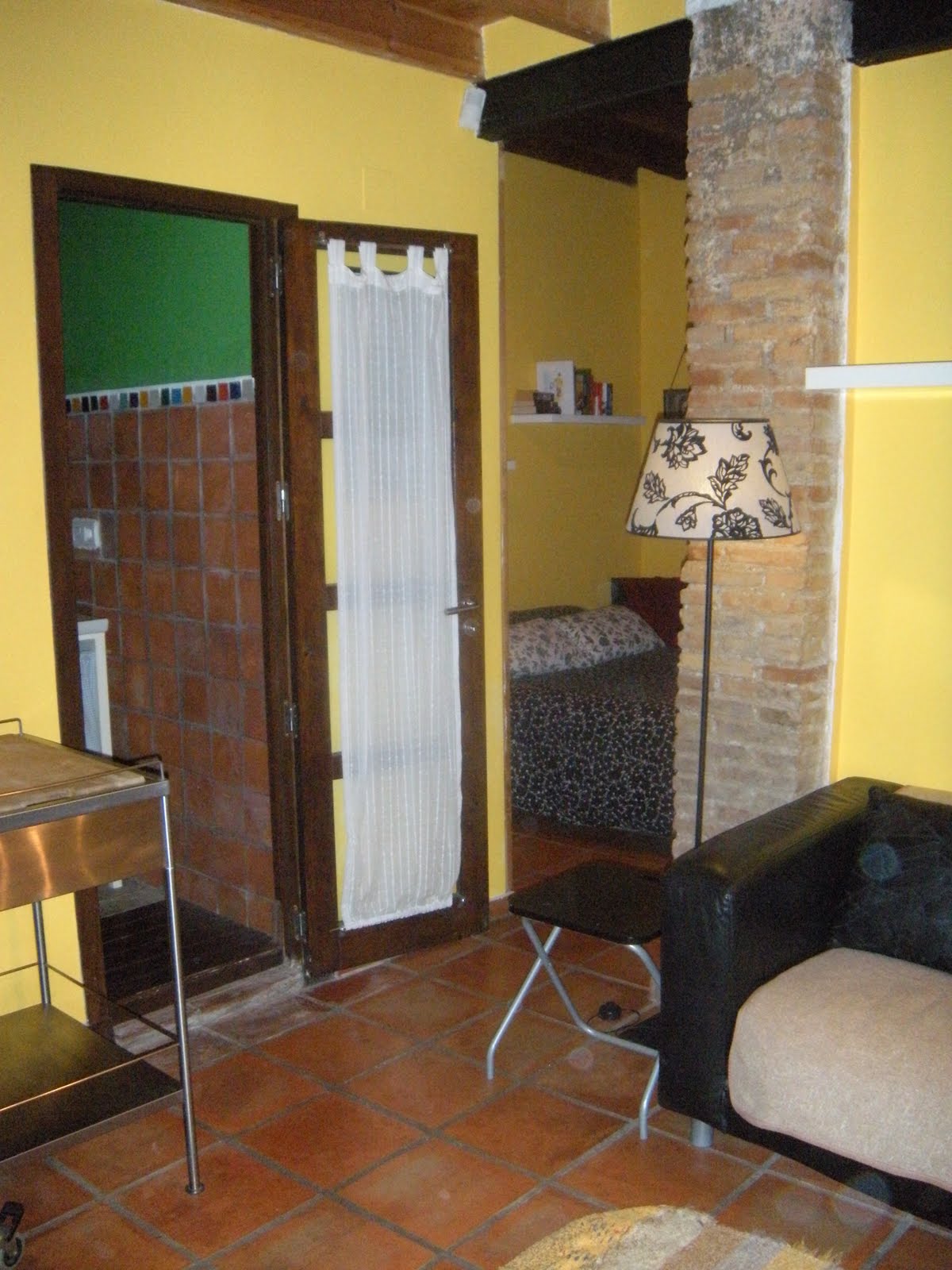
I found Fina’s apartment website by simple typing “Granada apartments” into Google. I wanted to rent one for a few days, and she immediately responded to my request. Some things went haywire in the process and she wasn’t able to “rent” to me, however, in a truly unmatched pro bono effort, Fina, who is from Seattle but married to a Spaniard, introduced me to her friends and family and let me stay in one of their apartments for free. I’m forever grateful, and can’t wait to go back and see them in their new house in the countryside. As I posted on her Facebook page today, I’m looking forward to baking in her traditional oven, and also by the pool…not necessarily in that order.

So, if there were no cooking classes in Granada, how did I occupy myself? Well, for starters, I got ready upon arrival and Fina, Joy and Danie took me to their favorite Moroccan café for red wine, small snacks, and a hooka. Yes, I said hooka. And I tried it (sorry mom). Despite a mild protest, they insisted, and it was fruity and kind of interesting. We went back to meet Fina’s two-month-old son, Diego, her dog, Henry (good taste in names!), Joy’s cat, Pee Wee, and Fina’s husband, Rapha. They couldn’t have been more hospitable. We ate homemade banana muffins and soup that Rapha made, and I made it to bed with a full stomach and a handful of new friends of the two- and four-legged sort.

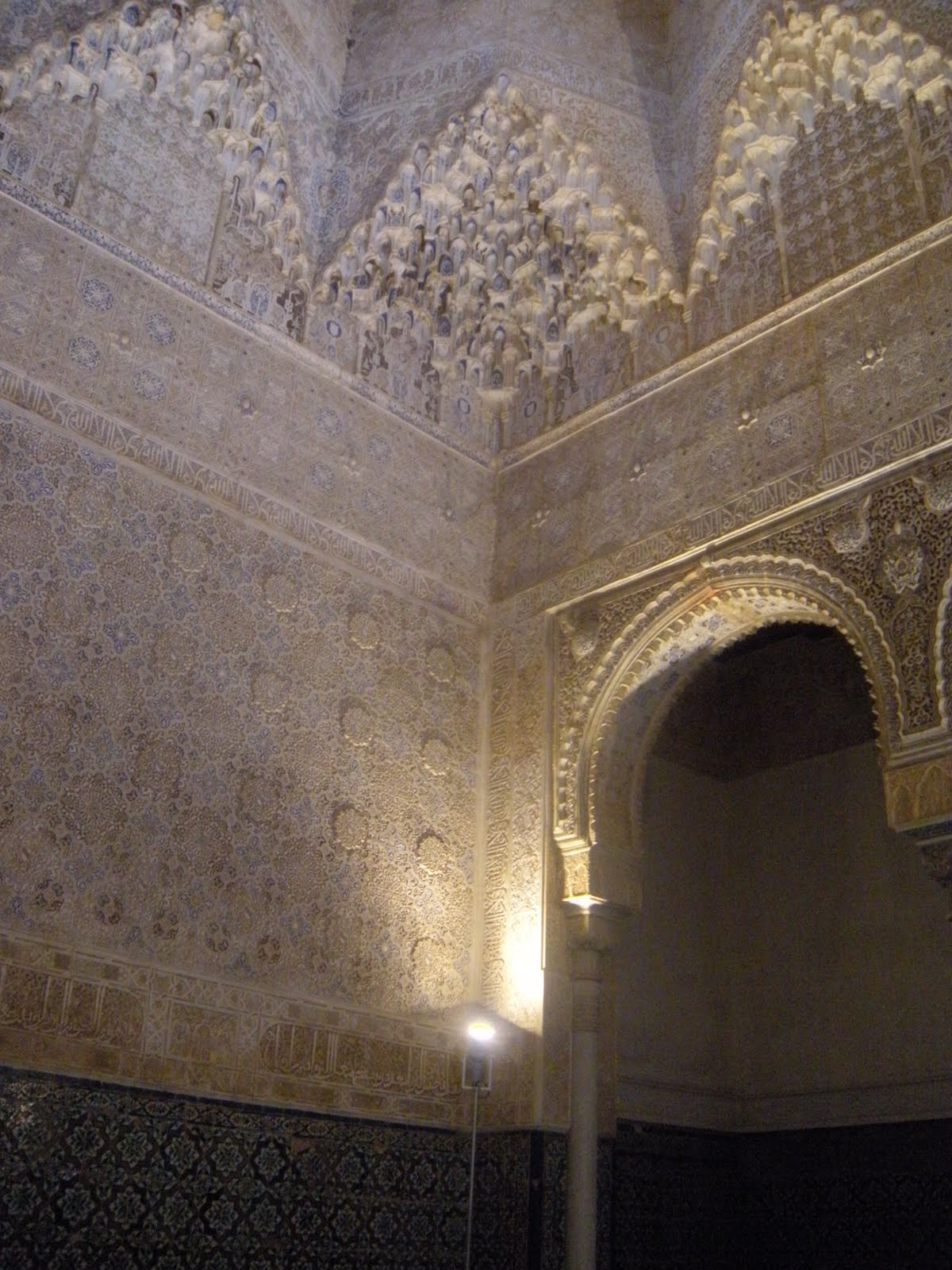
Yesterday, I took the (short) bus up to the Alhambra Palace, which was a smart move on account of the incline and what I‘d see there. Despite the rain that lingered throughout my trip, the Alhambra was spectacular! It was conceived as a palatine fortified town, and it’s on a rather steep hill with sweeping 360-degree views of all of Granada. It was really amazing. Between the 12th and 15th centuries, it was used as the residence for the Nasrid Sultans, high commanders, civil servants of the royal court, and soldiers of the elite. Washington Irving even lived there for a bit, and his stay inspired him to write Tales from the Alhambra.

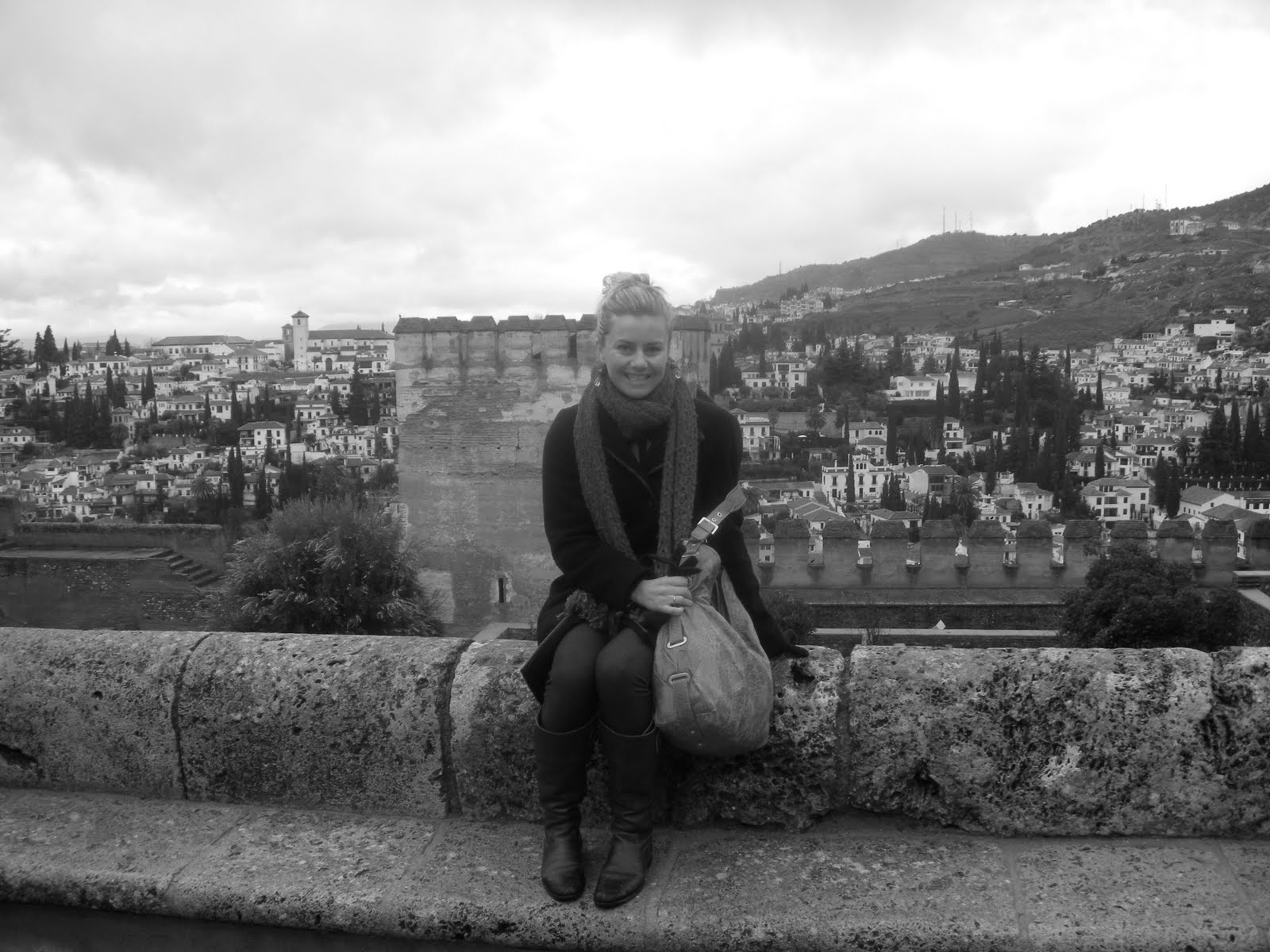
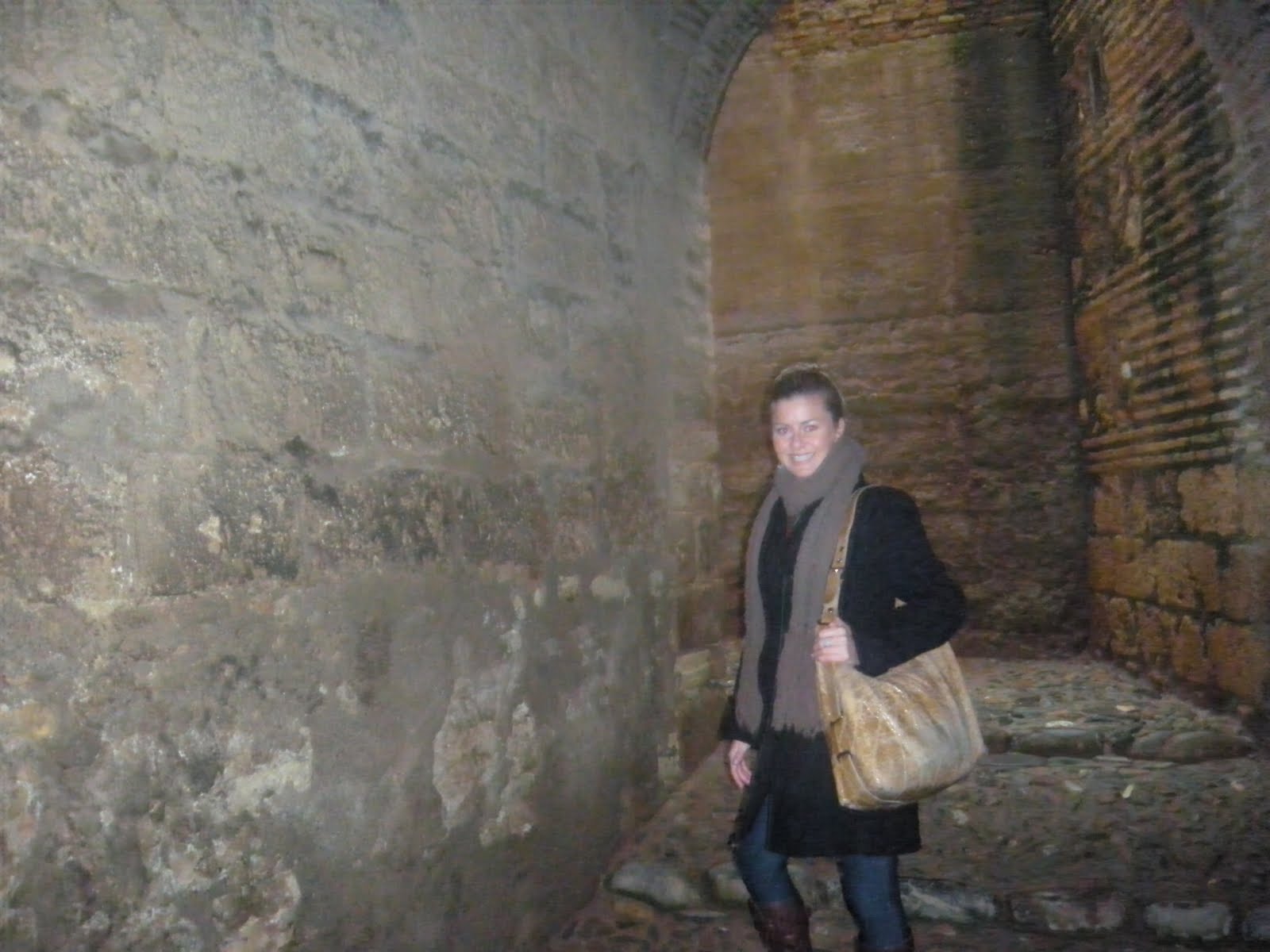
I toured the Nasrid Palaces, and the architecture and details were magnificent. And then, I took a spin through the Alcazaba military area, and had fun with the self-timer function on my camera. Passing back through Generalife (a massive garden) on my way out, I found a Calico cat that accompanied me for quite a bit of the walk. She was so cute, and there were actually wild cats everywhere that were all quite friendly. 

Had I been in Granada another time, I could have partaken in an olive oil tasting about an hour outside the city, but unfortunately, it’s closed at this time of year. Granada was really fascinating though, and completely different than Barcelona or Madrid. I’m really glad I came, despite not being able to cook. Rapha told me that this part of Spain is historically poorer than most parts, so stews are very common, and they use a ton of pork in this region. As for the city, the Islamic influence is evident everywhere, from the restaurants to the Turkish baths, to the hookas for sale everywhere (don’t worry– I didn’t buy one), and of course, the impressive Alhambra that looks approvingly over the entire city.

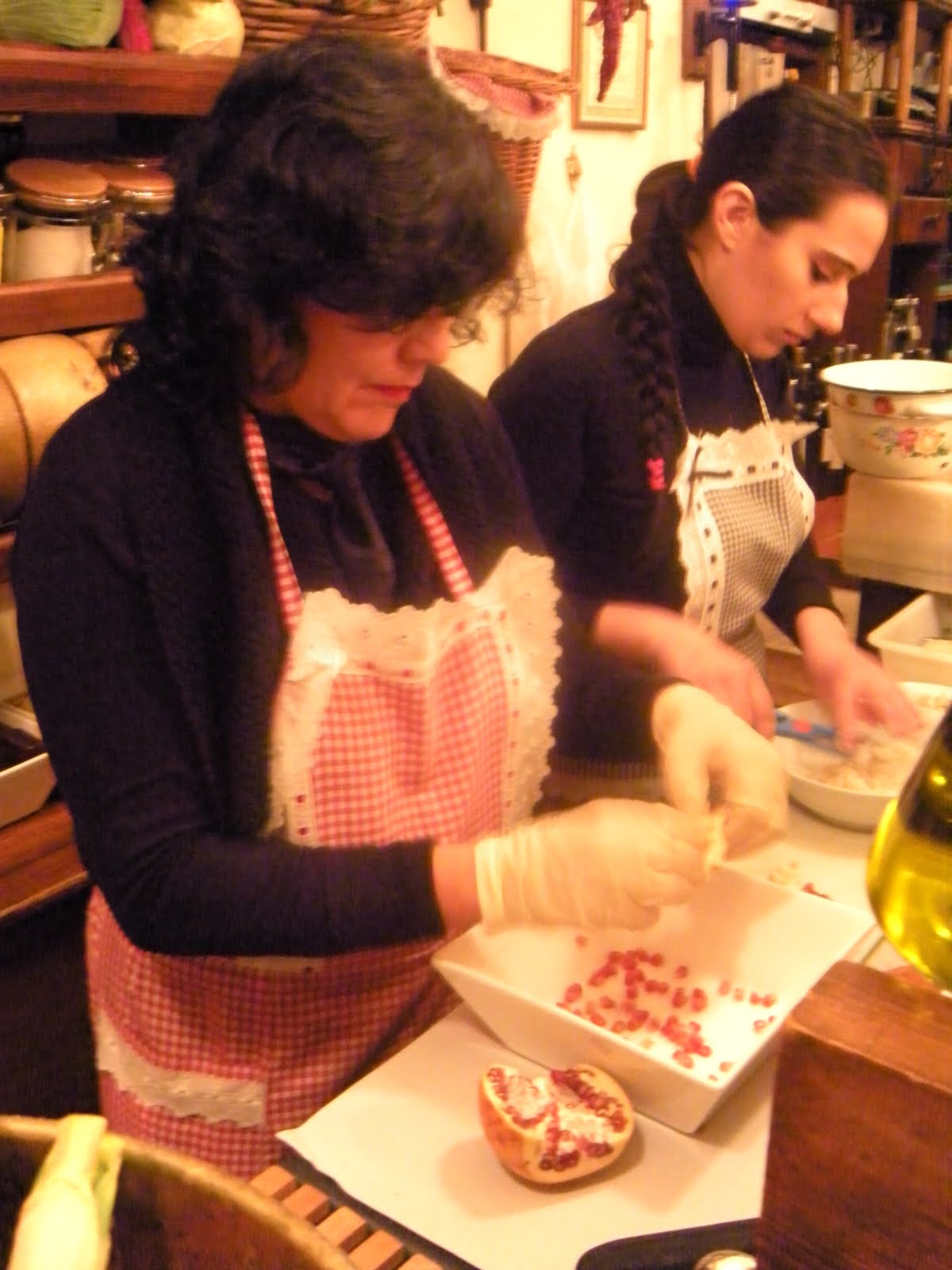
Oh, by the way…any idea what “Granada” means? Anyone? It’s Spanish for “pomegranate.” I guess my visit here was food-related whether I knew it or not.

Next Stop: Cooking Class#4 in Sevilla